
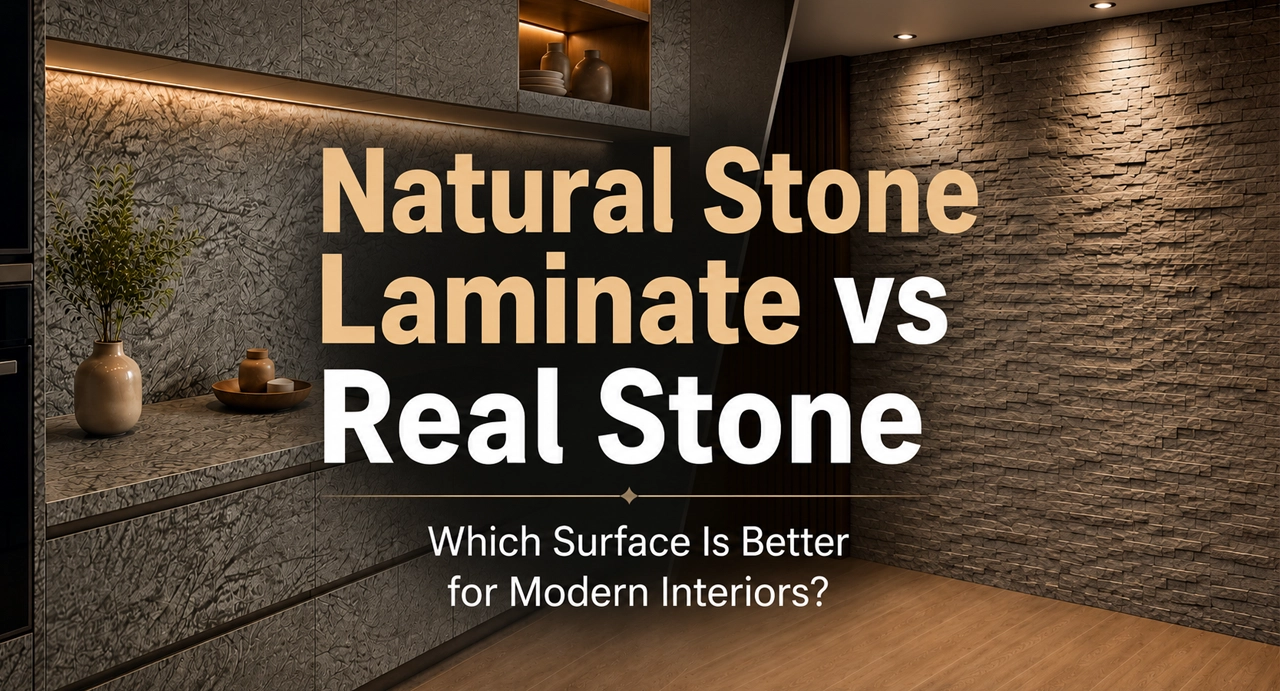
Natural stone has always been a symbol of luxury, but is it the most practical choice for modern interiors? With advancements in decorative surfacing, every leading laminate manufacturer now offers highly realistic natural stone laminates that replicate the look of marble, granite, slate, and other natural stones without the high cost, heavy weight, or extensive maintenance. This has made them a popular choice for homeowners, architects, and interior designers seeking elegant yet practical interior surfaces.
So, should you choose natural stone laminate or invest in real stone? The answer depends on where the material will be used, your budget, maintenance expectations, and the overall design goals of your space.
In this comprehensive comparison, you’ll discover the key differences between natural stone finish laminate and real stone, including appearance, durability, cost, maintenance, installation, and ideal applications. Whether you’re designing a modular kitchen, upgrading furniture, or planning a commercial interior, this guide will help you choose the surface that best suits your project.
What Is a Natural Stone Laminate?
A natural stone laminate is a decorative high-pressure laminate (HPL) designed to replicate the appearance of real stones such as marble, granite, sandstone, travertine, slate, quartzite, or concrete. Advanced printing and surface texturing technologies create realistic veining, patterns, and textures that closely resemble genuine stone. Unlike real stone slabs, laminate sheets are lightweight decorative surfaces that are bonded onto substrates like MDF, plywood, or particle board.
Today, stone laminates are widely used for: Kitchen cabinets, wardrobes, TV units, wall panels, office furniture, reception counters, retail displays, and commercial interiors. They provide the premium appearance of stone without much weight, complexity, or high installation cost.
Natural Stone Laminate vs Real Stone: Quick Comparison
| Feature | Natural Stone Laminate | Real Stone |
|---|---|---|
| Appearance | Stone-inspired designs with realistic textures | Natural patterns |
| Weight | Lightweight | Very heavy |
| Installation | Quick and simple | Requires installation from highly skilled professionals |
| Cost | Budget-friendly | Expensive |
| Maintenance | Easy to clean | Requires periodic sealing |
| Moisture Resistance | High | Depends on stone type |
| Design Variety | Extensive colors and finishes | Limited to natural availability |
| Surface Uniformity | Consistent | Inconsistent as every slab is unique |
| Furniture Applications | Excellent | Limited |
| Replacement Cost | Affordable | High Cost |
Appearance: Which Looks Better?
Both materials can create luxurious interiors, but they offer different visual experiences. Real stone delivers unmatched natural character. Every slab has unique veins, mineral formations, and color variations that cannot be perfectly replicated.
However, modern natural stone finish laminate has evolved significantly. High-definition printing and synchronized textures create remarkably realistic marble, granite, slate, and concrete effects that are difficult to distinguish from real stone at first glance.
For furniture and vertical applications, many homeowners find laminate offers nearly the same visual impact without the challenges associated with natural stone.
Durability Comparison
Durability depends on where the material is being installed. Real stone is extremely strong and performs exceptionally well under heavy loads. However, some stones like marble are softer and can develop scratches, stains, or etching over time.
A high-quality natural stone finish laminate offers excellent resistance to surface scratches, daily wear, stains, heat, abrasion, and household moisture. Since laminates are manufactured for everyday furniture use, they are highly suitable for residential and commercial interiors. For flooring or structural applications, real stone remains the stronger option.
Cost Comparison
Cost is one of the biggest deciding factors when choosing between real stone and stone-inspired laminates.
Real stone typically costs ₹250–₹2,500+ per sq. ft. (depending on the type of stone, finish, and thickness), with additional expenses for transportation, cutting, polishing, skilled labor, installation, and ongoing maintenance. These factors make the overall project cost significantly higher.
Stone-inspired laminates, on the other hand, generally cost ₹30–₹80 per sq. ft., or approximately ₹1,000–₹2,500 per standard 8 ft × 4 ft sheet. They offer the premium look of natural stone at a much lower investment. Installation is quicker, labor costs are lower, and replacement is more economical.
For budget-conscious residential and commercial projects, stone-inspired laminates deliver significantly better value by combining the aesthetics of natural stone with affordability, durability, and ease of maintenance.
Maintenance Requirements
One of the biggest advantages of a natural stone laminate is its low maintenance. It only requires regular dusting, cleaning with a soft cloth, and an occasional wipe with a mild soap solution. Unlike real stone, it does not require polishing or periodic sealing.
Real stone, especially marble and limestone, requires more attention. Many natural stones need periodic sealing to reduce staining and moisture absorption. For busy households and commercial environments, laminate is far easier to maintain.
Weight and Installation
Natural stone slabs are extremely heavy, requiring specialized transportation, skilled installation, reinforced support, and precision cutting, which increases both project complexity and installation costs. A natural stone laminate is much lighter, which makes fabrication faster and considerably reduces installation time. It is especially suitable for modular furniture and interior paneling.
Design Choices
Modern interior projects demand flexibility. Real stone offers only what nature creates. A natural stone laminate is available in a wide range of designs, including leather, rustic, concrete, and marble, and is offered in finishes such as high gloss and matt. This allows designers to match virtually any interior theme.
Sustainability Considerations
Sustainability is becoming an important factor in interior design. Real stone requires quarrying, transportation, and extensive processing. Modern laminate manufacturing has become increasingly efficient, with many manufacturers adopting responsible sourcing, lower-emission production processes, and certified manufacturing practices. Because stone laminates replicate the look of natural stone without using full stone slabs, they can help reduce the demand for quarried stone in many interior applications.
Pros and Cons of Natural Stone Laminate
Natural stone laminates have become a preferred choice for modern interiors because they combine the elegant look of stone with affordability and ease of use. However, like any surfacing material, they come with certain limitations. Here’s a quick look at the key advantages and disadvantages of natural stone laminates.
Pros
- Cost-effective
- Lightweight
- Easy installation
- Low maintenance
- Wide range of stone-inspired designs
- Scratch-resistant surface
- Suitable for furniture
- Available in multiple finishes and textures
- Consistent appearance
- Easy replacement
Cons
- Cannot replicate the depth of genuine stone perfectly
- Not intended for structural applications
- Requires a properly installed substrate (such as MDF or plywood) for optimal performance.
Pros and Cons of Real Stone
Real stone has long been valued for its timeless beauty, durability, and premium appeal. While it offers unmatched authenticity and structural strength, it also involves higher costs and greater maintenance. Here’s a quick overview of the pros and cons of choosing real stone for your interior or architectural project.
Pros
- Authentic natural appearance
- Every slab is unique
- Exceptional structural strength
- Long lifespan
- Premium property value
Cons
- Expensive
- Heavy
- Difficult installation
- Requires sealing for many stone types
- Higher maintenance
- Limited design availability
Which Material Should You Choose?
Choose a natural stone finish laminate if you want:
- Stone-inspired interiors within budget
- Easy maintenance
- Lightweight furniture
- Faster installation
- Multiple design choices
- Modern modular interiors
- Commercial furniture solutions
Choose real stone if you want:
- Premium luxury flooring
- Natural countertops
- Exterior applications
- Long-term structural performance
- Authentic natural materials
For many modern homes, combining both materials delivers the best results. Real stone can be used where structural strength is essential, while natural stone laminate provides elegant, practical surfaces for furniture and decorative interiors.
Final Thoughts
The debate between natural stone laminate and real stone is no longer simply about appearance. It is about selecting the right material for the right purpose.
Real stone remains unmatched for luxury architectural applications and structural installations. However, modern natural stone finish laminate has become the preferred choice for contemporary furniture and interior surfaces because it delivers sophisticated stone aesthetics, excellent durability, lower maintenance, easier installation, and significantly better value.
For today’s residential and commercial interiors, natural stone laminates offer an ideal balance of style, practicality, and affordability, making them one of the most versatile surfacing solutions available.