
When it comes to creating interiors that look refined, feel distinctive and stand up to everyday use, the surface finish can make all the difference. Unlike smooth laminate, textured laminate features a raised, embossed or tactile surface that adds depth and dimension.
Depending on the design, it can recreate the character of wood grain, stone, fabric, leather and other materials while providing the practical characteristics expected from decorative laminate surfaces. Among the laminates available today, textured laminate has become a popular choice for homeowners, architects and interior designers who want more than a flat decorative surface.
From kitchen cabinets and wardrobes to TV units, feature walls and commercial interiors, textured laminates can introduce visual warmth, sophistication or a contemporary architectural feel without requiring natural materials such as solid wood or stone. But with so many textures, patterns and finishes available, choosing the right one requires more than simply selecting a design you like.
This guide explains everything you need to know about textured laminate, including its benefits, different types, where it can be used, how it compares with regular laminate, how to choose the right design, how to maintain it, and what it costs.
What Is Textured Laminate?
Textured laminate is a decorative laminate with a surface that has a visible and tactile texture. Unlike a smooth laminate with only a printed design, textured laminate can be felt and seen, helping recreate the look of natural materials such as wood, stone, leather, or fabric.
The texture works with the decorative design to create a more realistic finish. For example, a woodgrain laminate can combine a wood pattern with a matching grain texture, giving it more depth and a natural-looking appearance.
Textured laminates are commonly used on furniture, wardrobes, cabinets, wall panels and other interior surfaces. They are applied over substrates such as plywood or MDF, with the exact construction and performance depending on the product and manufacturer.
What Are the Types of Textured Laminates?
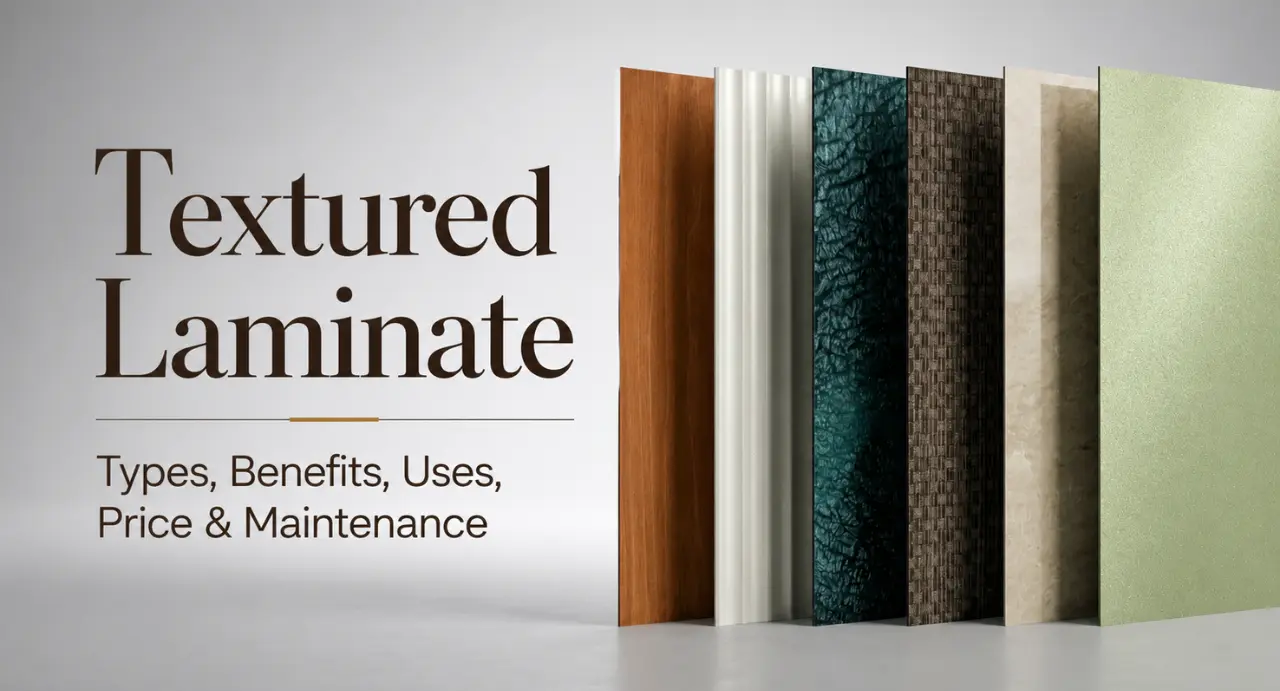
Textured laminates are available in several designs and surface finishes to suit different interior styles and applications. The most popular types of textured laminates include wooden, fluted, leather, fabric, stone and shimmer.
Wooden Textured Laminates
Wooden textured laminates recreate the natural grain and character of timber while offering a consistent, easy-to-use decorative surface. They are ideal for wardrobes, cabinets, TV units and furniture, with lighter wood tones creating a modern look and darker shades adding warmth.
Fluted Textured Laminates
Fluted textured laminates feature linear grooves that add depth, rhythm and a contemporary architectural feel. They work well for TV units, feature walls, wardrobe shutters, partitions and statement furniture, especially when paired with plain laminates.
Leather Textured Laminates
Leather textured laminates offer a rich, tactile finish inspired by natural leather. They are well suited to wardrobes, headboards, office furniture, feature panels and premium furniture designs, particularly in neutral and darker shades.
Fabric Textured Laminates
Fabric textured laminates mimic the subtle weave and softness of textiles such as linen. Their understated texture adds warmth and sophistication to wardrobes, bedrooms, headboards, furniture and decorative wall panels.
Stone Textured Laminates
Stone laminates recreate the look and texture of materials such as marble, slate and natural stone. They are popular for modern kitchens, furniture, feature walls and commercial interiors where a bold, contemporary finish is desired.
Shimmer Textured Laminates
Shimmer textured laminates combine tactile detail with a subtle reflective or metallic effect. They are ideal for accent furniture, wardrobes, decorative panels and feature surfaces where a more luxurious and eye-catching finish is required.
Why Choose Textured Laminate?
Textured laminate adds depth, character, and a premium look to furniture and interiors. It also offers practical and design advantages, making it suitable for a wide range of spaces. Here are some key reasons to choose textured laminate:
Adds Depth and Dimension
Embossed grains, grooves and patterns create depth and visual interest, helping wardrobes, TV units, furniture and wall panels look more distinctive.
Creates a Realistic Natural-Material Look
Wood, stone, leather and fabric textures combine visual patterns with tactile detail, creating a more authentic alternative to flat decorative surfaces.
Offers Greater Design Flexibility
Available in a wide range of colours, patterns and finishes, textured sunmica can complement modern, minimalist, classic, industrial and luxury interiors.
Suitable for Different Interior Applications
Textured laminates can be used across wardrobes, cabinets, furniture, wall panels, kitchens and commercial interiors, depending on the product’s specifications and intended application.
Helps Conceal Minor Everyday Marks
Certain textured and low-reflective finishes can make fingerprints and minor surface marks less noticeable than highly reflective smooth surfaces, depending on the texture, colour and finish.
Textured Laminate vs Plain Laminate
Textured and plain laminates can both be excellent surfacing choices, but they create distinctly different results.
| Feature | Textured Laminate | Plain Laminate |
|---|---|---|
| Surface | Tactile, embossed or structured | Generally smooth and uniform |
| Visual depth | Higher | Relies primarily on the printed design |
| Natural-material effect | Can combine visual and tactile detail | Primarily visual |
| Design character | Rich and dimensional | Clean and consistent |
| Cleaning | Depends on texture depth | Generally straightforward |
| Best for | Statement furniture, feature surfaces and tactile interiors | Broad range of furniture and interior applications |
The choice therefore isn’t simply about which one is “better.” It depends on the desired appearance, application, maintenance requirements and overall design concept.
A textured finish is particularly compelling when the surface itself is intended to become part of the design. A plain laminate can be the better choice when the goal is visual simplicity and easy, uninterrupted surfaces.
Where Can You Use Textured Laminate?
Textured laminate can be used in a wide range of residential and commercial spaces, including kitchen cabinets, wardrobes, TV units, living room furniture, wall panels, bedroom furniture, offices and commercial interiors. The best texture depends on the application and the desired look.
Kitchen Cabinets
Wood, stone and subtle textured finishes can work particularly well on kitchen cabinetry. When selecting a laminate for kitchen, consider the amount of daily use, exposure to stains and the manufacturer’s recommended performance specifications.
Wardrobes
Wardrobe shutters are an ideal canvas for textured laminates because their large surface area makes the texture a visible design element. Woodgrain, fabric, leather and fluted effects can all create distinctive wardrobe designs.
TV Units and Living Room Furniture
A textured laminate can turn a TV unit, console or storage wall into a focal point. Combining a statement texture with plain laminate can prevent the design from becoming overwhelming.
Wall Panels
Textured and fluted surfaces are particularly effective for feature walls, reception backdrops and TV walls because directional light can emphasise their dimensional character. Fluted surfaces are increasingly used in these applications for their ability to add shadow and architectural rhythm.
Bedroom Furniture
Fabric, leather, and warm wood textures are well-suited to bedrooms, where softer tactile finishes can complement the overall atmosphere.
Office and Commercial Interiors
Textured mica sheets can also be used across workspaces, hospitality environments, retail interiors and other commercial settings, provided the selected product meets the performance requirements of the application.
How Much Does Textured Laminate Cost?
Textured laminates generally costs around ₹1,500 to ₹3,500+ per sheet in India, depending on the brand, thickness, sheet size, design, texture, and finish. For premium options, Ogaan Laminates offers textured sunmica priced approximately between ₹1,699 and ₹2,649 per sheet, depending on the selected design and finish.
The overall project cost will also include adhesive, substrate, fabrication, labour, wastage, and installation. So, compare textured laminates based on quality, thickness, finish, design, and application suitability, not just the sheet price.
How to Clean and Maintain Textured Laminate
Textured laminates are easy to maintain with regular care. Use a soft cloth and a mild cleaning solution for everyday dust, dirt, and stains, and follow the manufacturer’s care instructions for the specific product.
For deeper textures and grooves, clean gently to prevent dust from settling in recessed areas. Avoid abrasive scrubbers, harsh chemicals, and excessive moisture, as these can damage the laminate surface and finish.
Conclusion
The right textured laminate does more than cover a surface; it can define how an interior looks and feels. From the warmth of woodgrain and the richness of leather to the architectural rhythm of fluted finishes and the sophistication of stone and shimmer textures, there is a textured laminate for almost every design direction.
The key is to choose texture with purpose. Consider where the laminate will be used, how much visual impact you want, how the surface will respond to lighting, and how much maintenance the application demands. Then compare the available designs, specifications and prices before making the final decision.
When selected thoughtfully, textured laminates offers a compelling combination of visual depth, tactile character, design flexibility and everyday practicality. That makes it a strong option for modern furniture, cabinetry, wardrobes, feature walls and a wide range of residential and commercial interiors.