
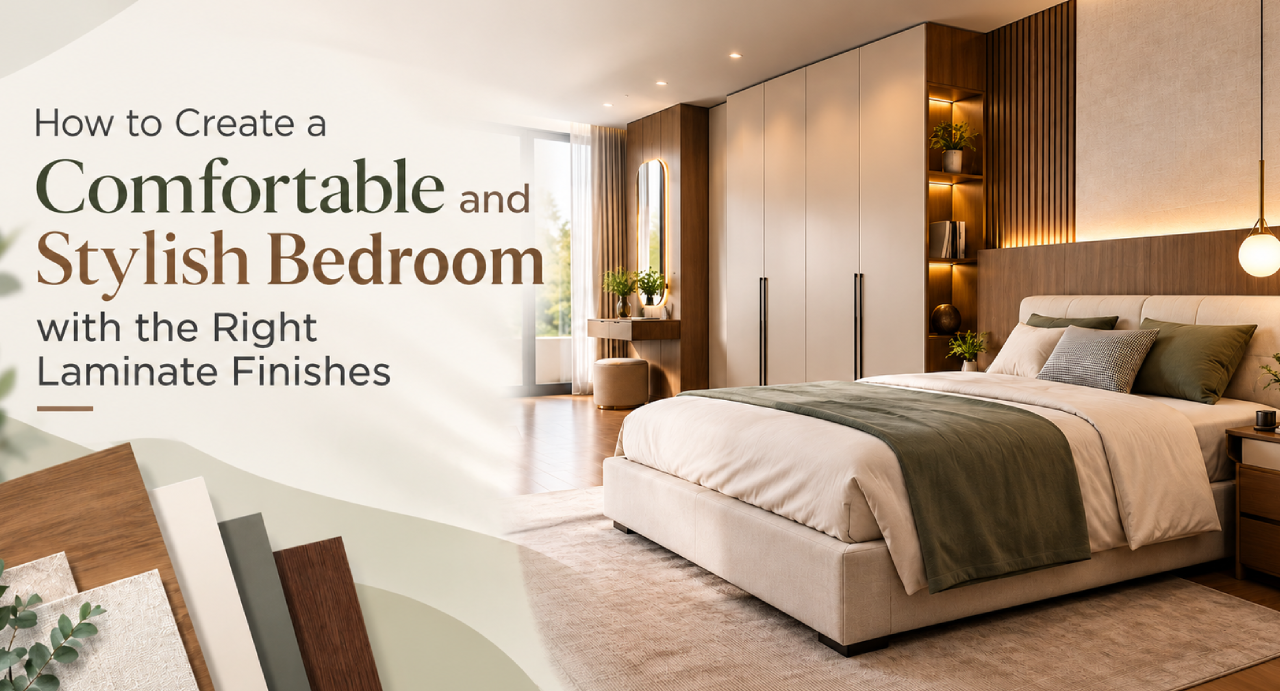
A stylish bedroom is created by bringing together furniture, colours, materials, lighting and functionality. While the bed and mattress contribute to comfort, the finishes used across wardrobes, headboards, bedside tables and dressing units have a major influence on the room’s overall appearance.
Laminates offer a practical way to introduce colour, texture and character to bedroom furniture. With options ranging from wood-look and solid colours to matt, high-gloss and textured finishes, they can be adapted to different interior styles and furniture applications.
The key is to select finishes that complement one another while also considering the room’s size, lighting and everyday requirements.
Choosing Laminates for Bedroom Furniture
Before selecting a laminate, consider where it will be used and how the furniture will fit into the overall bedroom design.
Large furniture pieces such as wardrobes can have a significant visual impact, so their laminate finish should work with the walls, flooring and other elements in the room. Smaller pieces, such as bedside tables, can be used to introduce a contrasting colour or texture.
The furniture style should also influence your choice. A simple, minimalist bedroom may work well with solid-colour or subtle wood-look laminates, while a more expressive interior could incorporate textured or patterned finishes.
It is also useful to consider how frequently the surface will be handled. Wardrobe shutters, drawers and dressing units are used regularly, so factors such as durability, ease of cleaning and resistance to everyday wear should be considered alongside appearance.
Laminate Applications for Bedroom Furniture
Laminates can be used across several bedroom furniture applications, allowing you to create a consistent material palette throughout the space.
Wardrobes
Wardrobes often occupy a large portion of a bedroom wall, making their finish an important design decision. Wood-look laminates can add warmth, while solid colours can create a clean and contemporary appearance.
For larger wardrobes, consider how the pattern or texture will look across the entire surface. A finish that looks appealing on a small sample may create a very different effect when used across several wardrobe shutters.
Headboards
The headboard can act as a focal point in the bedroom. A laminate finish can help make it stand out without requiring an elaborate design.
Wood-look laminates can create a warm backdrop, while darker, textured or contrasting finishes can add visual depth. If the headboard is the main feature, simpler laminate finishes on the wardrobe and other furniture can help maintain balance.
Bedside Tables
Because bedside tables are relatively small, they can be a good place to introduce a secondary laminate finish.
For example, a bedroom with a wood-look wardrobe could use a neutral solid-colour laminate on the bedside tables. Alternatively, a textured finish can add subtle visual interest without overwhelming the room.
Dressing Units
Dressing units combine storage and style. Their laminate finish can match the wardrobe for a coordinated look or provide a subtle contrast.
Consider the mirror, lighting and surrounding furniture when selecting the finish. A reflective or lighter laminate may work well in a dressing area with limited natural light, while a wood-look finish can add warmth.
Storage Furniture
Additional storage should complement the main furniture rather than make the room feel visually crowded.
Using related laminate finishes across storage units can help them blend into the overall design. Liner laminates can also be considered for the internal surfaces of wardrobes, drawers and storage furniture where a practical finished surface is required.
Choosing Colours, Textures and Finishes
The colour and finish of a laminate can significantly influence the character of bedroom furniture.
- Wood-look laminates can bring warmth and a natural appearance to beds, wardrobes, headboards and bedside furniture. They can work well in interiors inspired by natural materials.
- Solid-colour laminates provide clean, uninterrupted surfaces and can be used to create minimalist or contemporary interiors. They can also be paired with wood-look finishes for contrast.
- Matt laminates have a low-reflection appearance and can create a softer, understated look. They can be suitable when you want furniture to have a subtle visual presence.
- High-gloss laminates offer a reflective, polished appearance and can work particularly well in contemporary bedroom interiors. They can also reflect available light and make furniture appear more prominent.
- Textured laminates can add depth and tactile interest. They can be particularly effective on headboards, wardrobe shutters or selected feature areas.
The choice does not have to be limited to one finish. Combining two complementary finishes can make the furniture look more layered and considered.
Coordinating Laminate Finishes Across Furniture
A cohesive bedroom does not mean using exactly the same laminate on every piece of furniture. In fact, using one finish everywhere can sometimes make the interior look repetitive.
Instead, choose a primary finish and introduce complementary materials around it.
For example, a warm wood-look laminate could be used on the wardrobe and bed, while a neutral solid-colour finish is introduced on the bedside tables. A textured laminate could then be reserved for the headboard as a feature.
When combining different laminates, look for a visual connection between them. This could come from similar undertones, complementary colours or related textures.
It is also important to consider the other materials already present in the room, including flooring, wall colours, curtains, upholstery and decorative elements.
Selecting Finishes Based on Room Size and Lighting
The size of the bedroom and amount of natural light can influence how a sunmica appears.
In smaller bedrooms, lighter colours can help large furniture surfaces feel visually lighter. Soft white, beige, light grey and lighter wood tones can work well when creating a more open appearance.
Darker finishes can add depth and create a richer atmosphere, but using them across every large furniture surface can make a compact room feel visually enclosed. They can instead be used selectively on a headboard, bedside table or smaller furniture section.
Lighting should also be considered before finalising a laminate. Glossy surfaces can reflect more light, while matt finishes create a softer appearance. Textured surfaces can create shadows and depth depending on how light falls across them.
Whenever possible, view laminate samples in the actual room and under the lighting conditions in which they will be used.
Practical Considerations: Everyday Use and Maintenance
Bedroom furniture is used every day, so practical performance should be considered alongside design.
Wardrobe shutters, dressing units, drawers and bedside tables are frequently touched and may be exposed to dust, spills and everyday wear. Depending on the product, laminates can offer characteristics such as scratch resistance, stain resistance, abrasion resistance or anti-fingerprint properties.
These features can vary between products, so check the specifications of the particular laminate before making a decision.
Maintenance is another consideration. Choosing surfaces that are easy to clean can make everyday bedroom upkeep simpler. Always follow the manufacturer’s care instructions, particularly when using specialised finishes.
Don’t Forget Bedroom Comfort
While furniture and finishes determine much of the room’s visual character, comfort remains an important part of bedroom design.
The bed and mattress should suit the way the room is used. When selecting a mattress, consider factors such as sleeping position, preferred firmness, available bed size and the level of support required. A mattress buying guide can provide more detailed guidance when comparing different options.
Other elements such as comfortable bedding, ventilation, room temperature and appropriate lighting can also contribute to a comfortable bedroom.
The aim is to make the furniture, finishes and comfort elements work together rather than treating them as separate decisions.
Creating a Cohesive Bedroom Interior
Once the furniture and laminate finishes have been selected, consider the bedroom as a complete interior.
Ask yourself:
- Do the wardrobe and bed complement each other?
- Does the headboard work with the overall furniture design?
- Are the laminate colours compatible with the walls and flooring?
- Are different textures and patterns balanced?
- Does the furniture suit the size of the room?
- Does the lighting work with the selected finishes?
- Are the furniture surfaces practical for everyday use?
- Is there enough open space for comfortable movement?
A cohesive bedroom does not require every element to match. Instead, the colours, materials, textures and furniture pieces should feel connected while serving a practical purpose.
Closing Thoughts
Creating a stylish and comfortable bedroom involves more than choosing individual pieces of furniture. The colours, materials, textures, lighting and finishes all contribute to the final interior.
Laminates offer flexibility across wardrobes, headboards, bedside tables, dressing units and storage furniture, allowing you to create different looks while maintaining a consistent design language.
By considering the room’s size, lighting, interior style, furniture applications and everyday maintenance requirements, you can select laminate finishes that are both practical and visually appealing. When these choices are combined with comfortable furniture and a suitable mattress, the result can be a bedroom that feels cohesive, functional and inviting.
 Laminates Business