
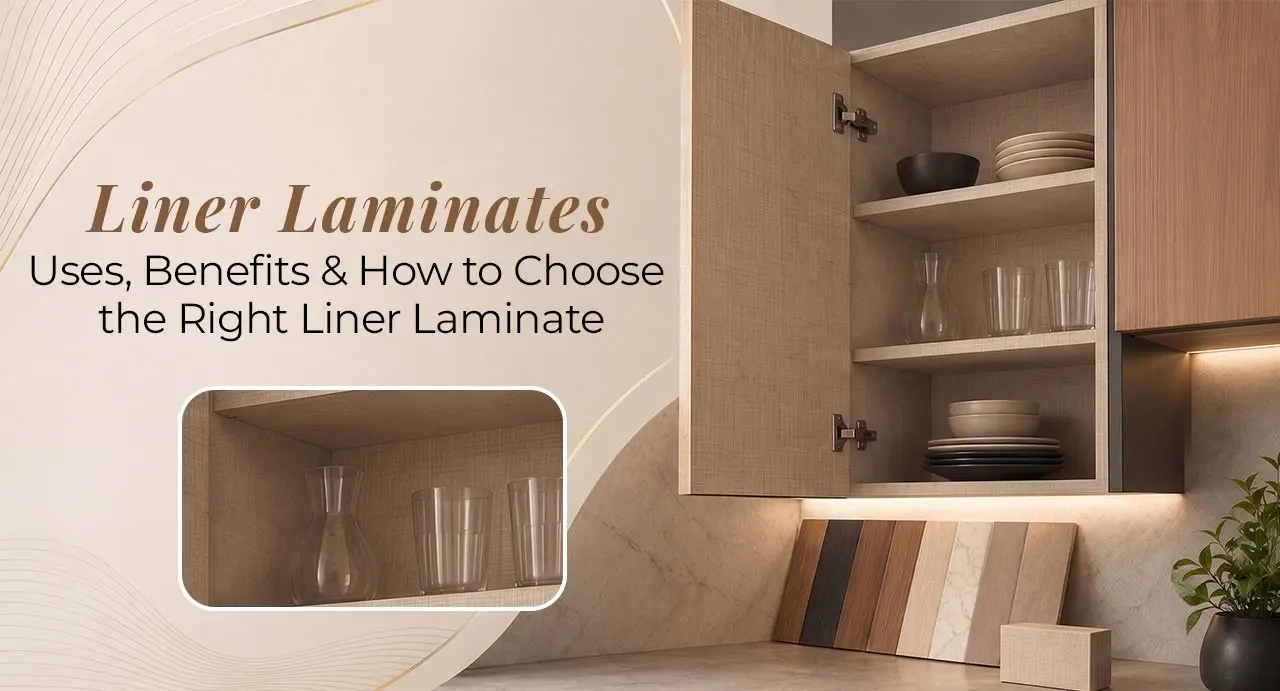
While exterior materials define style, furniture interiors require strong protection against daily wear, moisture, and stains. Liner laminates serve as the best laminate for shielding the inside of wardrobes, cabinets, drawers, storage units, and other furniture against long-term surface damage.
Designed primarily for interior furniture applications, liner laminates offer a practical combination of durability, easy maintenance, and a neat finish. They can be used across residential, office, and commercial furniture, making them a versatile choice for modern interiors.
In this guide, we explore the key uses and benefits of liner laminates, the furniture applications where they work best, and the factors to consider when selecting the right liner laminate.
What Are Liner Laminates?
Liner laminates are thin sheets applied to the inner surfaces of furniture to protect against moisture, wear, and structural warping. Unlike decorative laminates, which are generally selected for the visible exterior of furniture, liner laminates are designed for functional interior surfaces.
Where Are Liner Laminates Used?
The versatility of liner laminates makes them suitable for several furniture interiors. They are primarily installed on non-visible internal surfaces, including shelves, drawers, back panels, and storage compartments across residential and commercial furniture. The most common applications include:
Wardrobe Interiors
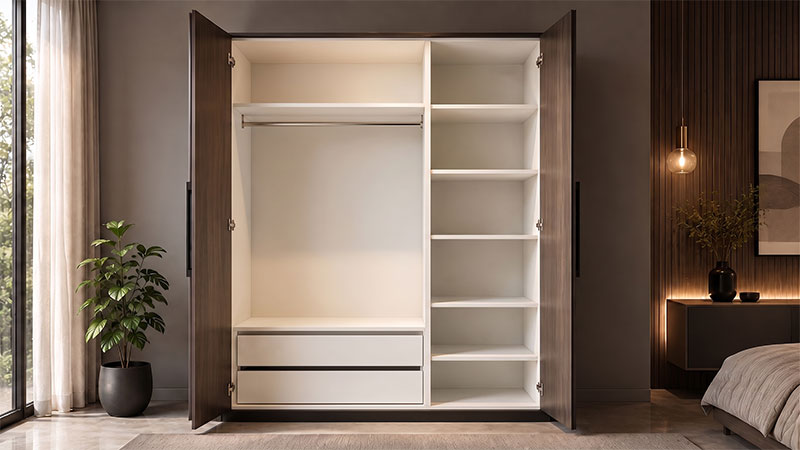
Wardrobes are opened and used frequently, making their internal surfaces susceptible to dust, stains, and everyday wear. Liner laminates provide a smooth, finished surface that can make wardrobe interiors easier to clean and maintain. They can be used across shelves, side panels, and other internal surfaces, helping create a cohesive and well-finished wardrobe interior.
Kitchen Cabinet

Kitchen cabinets are exposed to a demanding environment where moisture, spills, and frequent cleaning are common. Using a suitable liner laminate for kitchen cabinet interiors provides a practical, easy-to-maintain surface. Liner laminate also complements the exterior finish of modular kitchens while providing a neat finish inside cabinets and storage compartments.
Drawer

Constant daily handling requires drawer interiors to have a resilient finish capable of withstanding continuous friction. A durable surface helps prevent scratches and resist household stains, keeping the interiors looking neat with minimal maintenance. Liner laminate sheets provide an added layer of protection, resulting in a practical, low-maintenance storage space that makes everyday cleaning quick and effortless.
Shelves and Storage Unit

Storage furniture often combines multiple shelves, cabinets, and compartments, making interior surfaces an important part of its overall functionality. These inner areas benefit from finishes that are easy to clean and capable of maintaining a neat appearance through regular use. Liner laminate offers a practical solution, providing a consistent surface across storage interiors for both residential and office applications, subject to the required product specifications.
TV Unit

TV units often combine open display shelves with enclosed compartments designed to keep everyday items organised and out of sight. The interiors of these closed spaces need a surface that remains neat while being easy to clean and maintain with regular use. Liner laminate provides a practical finish for these areas, helping maintain a clean, coordinated appearance when storing books, electronics, accessories, and other household items.
Study Table

Study tables and home-office furniture frequently include drawers, cabinets, and compartments that keep stationery, documents, devices, and other essentials organised. Since these spaces are accessed regularly, their internal surfaces need to remain neat and presentable without demanding extensive upkeep. Liner laminates add a finished touch to these areas while making them easier to clean, making them well suited to furniture intended for consistent everyday use.
Key Benefits of Liner Laminates
Liner laminates are designed to enhance the functionality and finish of furniture interiors. Their key benefits make them a practical choice across a range of residential and commercial applications.
Easy Maintenance
A smooth laminate surface can generally be cleaned more easily than unfinished furniture substrates. This is particularly useful for kitchens, wardrobes and storage areas where dust and occasional spills are unavoidable.
Durable Interior Surfaces
Furniture interiors are exposed to repeated handling, movement of stored items, and everyday wear. A suitable liner laminate can help protect these surfaces and contribute to the long-term usability of the furniture.
Protection Against Everyday Exposure
Depending on the product’s specifications, liner laminate can provide resistance against factors such as moisture, stains, and surface wear. This makes them especially useful in areas such as kitchen cabinetry and frequently used storage furniture.
Clean and Finished Appearance
Furniture interiors can have a significant impact on the overall quality of a piece. Liner laminate provides a consistent finished surface, helping interiors look as considered as the exterior.
Versatile Applications
From wardrobes and kitchen cabinets to study tables and TV units, liner laminates can be used across a wide range of furniture interiors. This versatility makes them suitable for both residential and commercial furniture applications.
Practical and Cost-Effective
For furniture manufacturers and homeowners, liner laminates can provide a practical way to finish internal surfaces without compromising on functionality. The right product can balance appearance, performance, and long-term maintenance requirements.
How to Choose the Right Liner Laminate
Choose a liner laminate based on factors such as durability, thickness, finish, maintenance needs, application, and compatibility with the furniture surface. Considering these factors helps ensure the laminate suits the intended use and provides reliable performance over time.
Consider the Application
Start by identifying where the liner laminate will be used. A kitchen cabinet interior may require different performance characteristics from a wardrobe or study table.
Choose the Right Color and Finish
Available colors include snow white, cream, ivory, light mint, grey, natural teak, dark walnut, mahogany, and beige laminate. The range is also available in matt finish and high-gloss finish options.
Check Durability and Performance
Consider the level of daily use and the type of wear the surface is likely to experience. Frequently handled areas such as drawers and storage compartments may benefit from a durable surface designed for regular use.
Consider Moisture Exposure
For kitchens and other areas where the surface may come into contact with moisture, check the manufacturer’s specifications for moisture resistance and suitability.
Choose the Right Texture
Liner laminates are available in a range of textures, including wooden, smooth marble, and fabric laminate texture, allowing furniture interiors to achieve different visual and tactile finishes.
Prioritise Quality and Compatibility
Always consider the laminate’s specifications, fabrication requirements, and compatibility with the substrate and application. Choosing a product from an established laminate manufacturer can also help ensure consistent quality and performance.
Conclusion
Furniture interiors deserve the same attention to functionality as their visible surfaces. Liner laminates provide a practical solution for finishing and protecting areas such as wardrobe interiors, kitchen cabinets, drawers, shelves, TV units and study tables.
With benefits including easy maintenance, durability, a clean appearance and versatile applications, they can contribute to furniture that is both functional and visually well-finished. The best choice ultimately depends on the application, expected level of use, moisture exposure, desired finish and product specifications.
By evaluating these factors before selecting a liner laminate, homeowners, designers and furniture manufacturers can choose a solution that meets the practical demands of the space while complementing the overall furniture design.
 Laminates Business