
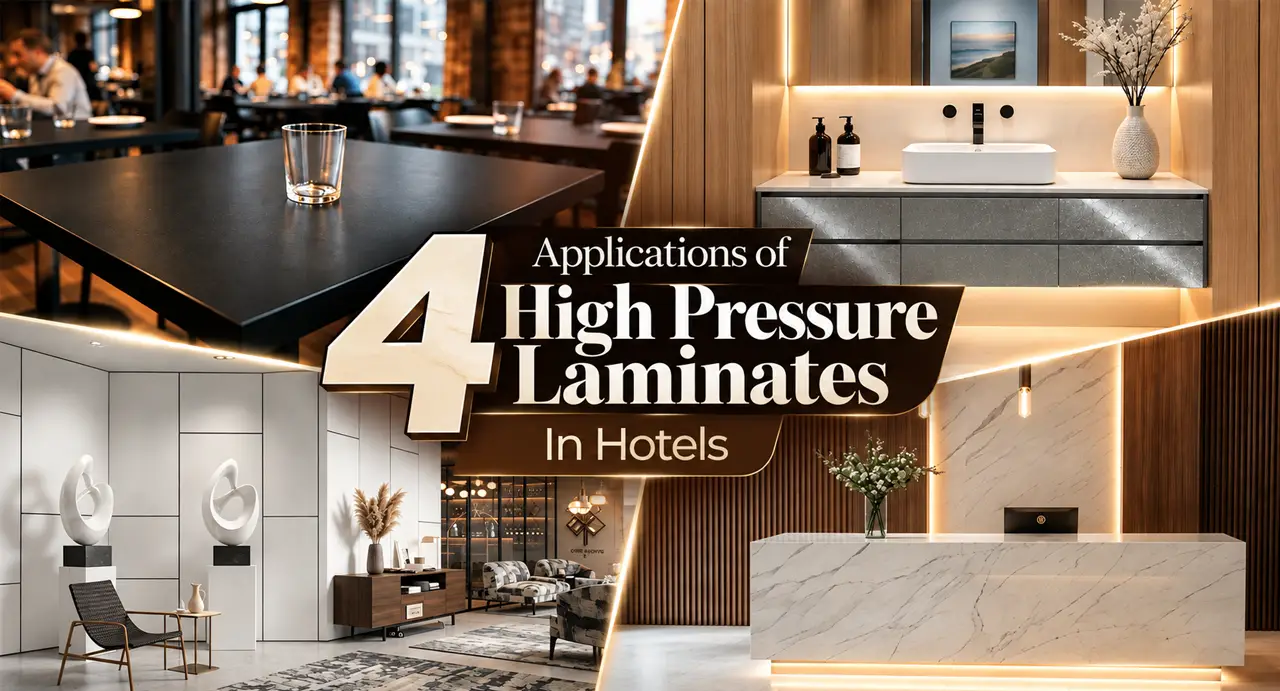
High pressure laminates are widely used in hotels for interior surfaces that need to withstand regular use while maintaining a refined appearance. They offer a practical combination of durability, design flexibility, and easy maintenance, making them suitable for several demanding areas across a hotel. Their application can range from furniture and counters to wall surfaces, with the final specification depending on the conditions each surface is expected to handle.
For hotels, choosing the best laminates is not simply about selecting an appealing colour, pattern, or finish. The laminate grade needs to match the application, while factors such as surface orientation, expected wear, moisture exposure, cleaning frequency, substrate, edge treatment, and fabrication method also influence the final selection. This becomes particularly important in hospitality projects, where surfaces are exposed to repeated daily use and consistent maintenance.
A well-planned HPL specification can help achieve the desired design without overlooking the practical demands of the space. With the right product and construction approach, HPL sheets can support both the visual character of a hotel interior and the performance expected from surfaces used every day.
The following four applications highlight where high pressure laminates can be effectively used in hotel interiors, along with the key considerations that influence their specification.
Hotel Reception Desks and Waiting Area
Reception desks and waiting area furniture play an important role in the overall appearance of a hotel. Since these surfaces are used and cleaned throughout the day, high pressure laminates are a practical choice for creating a refined finish that can support regular hotel use. They are available in a wide range of woodgrains, marble laminate designs, colours, and textures to suit different interior styles.
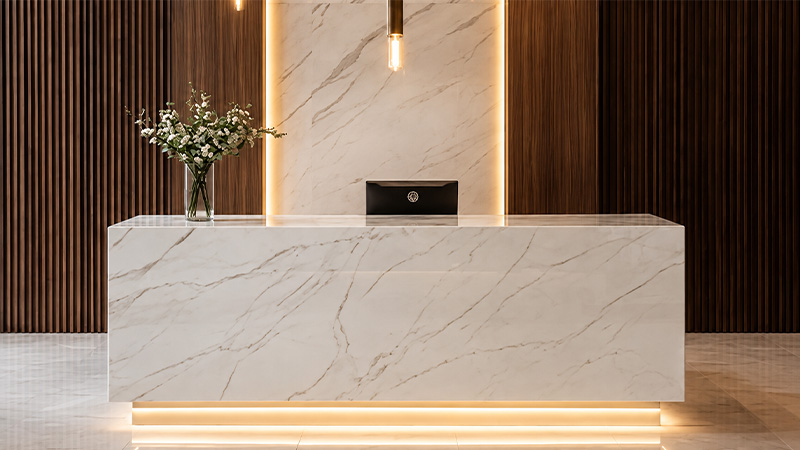
HPL can be used across reception desks, storage fronts, side panels, and waiting area furniture, allowing the same décor or complementary finishes to continue across the space. This creates a more coordinated and premium look while keeping the reception area visually consistent with the wider hotel interior. The combination of design flexibility and practical performance makes HPL well suited to hotel reception areas where appearance and everyday use need to work together.
Hotel Lobby Feature Walls
High pressure laminates give hotel lobby feature walls a strong visual presence, particularly where the design calls for large areas of colour, pattern, texture, or material-inspired finishes. Woodgrains can create a warmer setting, while marble, stone, metallic, and abstract designs can bring a more distinctive character to the space.
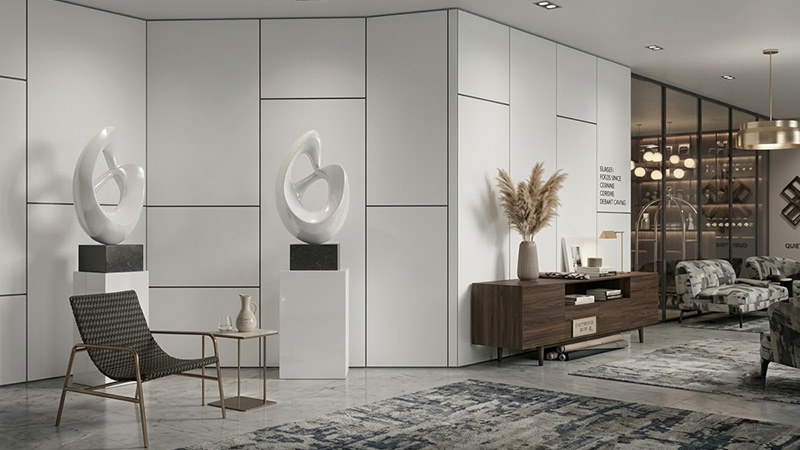
HPL can be used to build statement walls behind the reception, lift lobby panels, branded backdrop walls, and other prominent areas where the surface forms part of the hotel’s visual identity. Large format designs can carry patterned laminates more effectively across expansive surfaces, while carefully planned panel placement can create geometric compositions, framed sections, or uninterrupted visual fields.
For hotel interiors, this makes HPL more than a surface finish for feature walls. It becomes a design element that can define the mood of the lobby, strengthen the property’s visual identity, and create a memorable first impression.
Washroom Vanity Fronts and Counters
Hotel washroom vanities are a natural application for HPL, particularly across counter surfaces, drawer fronts, shutters, and surrounding cabinetry. HPL can be integrated seamlessly with sinks, mirrors, fixtures, and storage elements. For areas exposed to regular moisture and cleaning, water resistant laminates can provide a practical surface option while maintaining the clean, coordinated appearance expected in hotel washrooms.
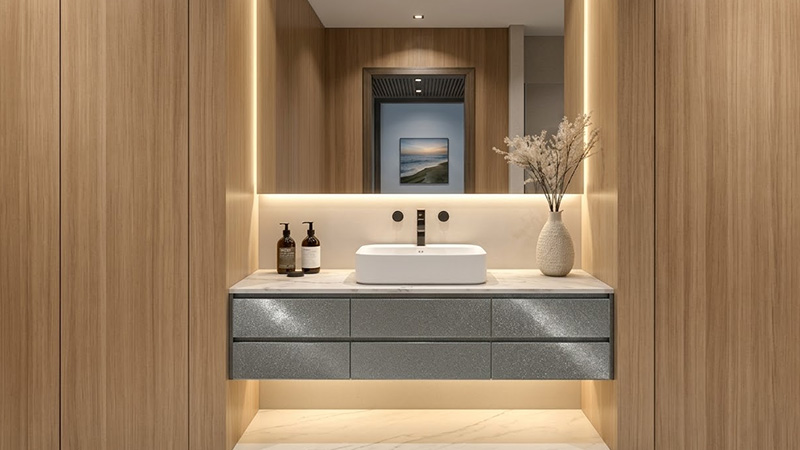
For counters and vanity fronts, HPL also allows designers to combine different décors within the same installation. A stone-inspired counter with a contrasting front, a continuous woodgrain finish, or a simple solid surface can create distinct visual effects without changing the basic furniture construction.
In guest rooms, suites, and shared hotel washrooms, HPL can be used across multiple vanity units to maintain a consistent finish throughout the property. It also works well with integrated storage, drawer systems, and customised vanity l
Restaurant Tabletops and Dining Furniture
Hotel restaurants place considerable demands on dining furniture, particularly tabletops that are repeatedly exposed to food, beverages, cutlery, and routine cleaning. High pressure laminates are well suited to these surfaces, offering a finished appearance that works across restaurant tables, buffet counters, café furniture, and service areas.
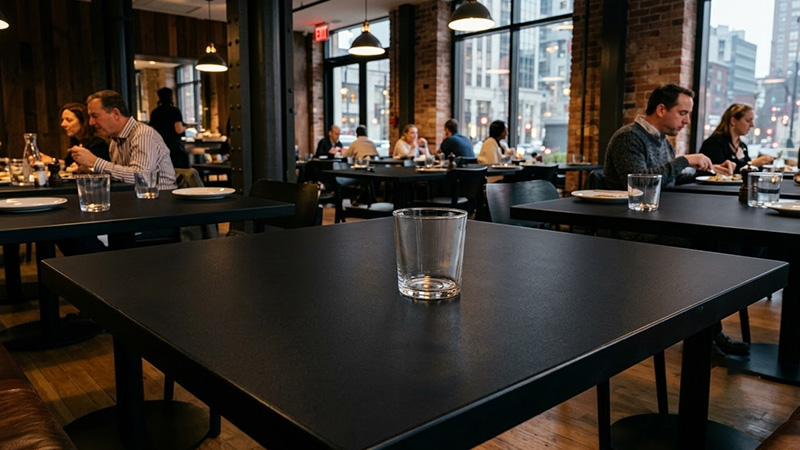
HPL also gives designers greater scope to coordinate different furniture elements within the same restaurant. A single décor can run across tabletops and consoles, while contrasting mica sheets can be used to distinguish tabletops from table bases, counters, or storage furniture. This makes it easier to build a considered dining environment without relying on multiple surface materials.
For hotels with restaurants, cafés, and all-day dining spaces, high-pressure hotel laminates provides a practical way to bring the furniture design together while supporting the everyday demands placed on these
The Role of Finish Selection in Hotel HPL Applications
Finish is more than a visual consideration in hotel interiors. The same décor can create a different look depending on its surface texture and sheen. Matt and textured finishes work well in high-contact areas where fingerprints and minor marks need to be less noticeable, while high-gloss HPL and acrylic laminates can create a sleek, polished appearance where greater reflectivity is part of the design.
The finish should also be viewed under the actual lighting planned for the hotel. Large feature walls, reception counters, and restaurant tabletops can appear different under warm decorative lighting, natural daylight, or strong artificial illumination. Reviewing samples in the intended setting helps ensure the selected finish delivers the desired appearance once installed. Anti fingerprint laminates can also be considered for hotel surfaces where maintaining a clean, uniform appearance is particularly important.
Why HPL Specification Matters More Than Laminate Selection Alone
Choosing a suitable HPL is only one part of achieving the required performance in a hotel interior. The final result also depends on the laminate grade, thickness, finish, substrate, adhesive, edge detailing, fabrication, and installation being appropriate for the application. Even a high-performance laminate can underperform when the supporting construction or installation is not suited to its intended use.
Hotel projects often involve large quantities of sunmica across multiple areas, making the choice of supplier an important part of the overall material decision. Comparing top 10 laminate brands in India can help identify options based on décor collections, HPL grades, surface finishes, technical performance, availability, and application support. The final selection should still be based on the specific requirements of each hotel surface.
Conclusion
Hotel interiors need surfaces that look refined while standing up to the demands of everyday hospitality. High pressure laminates support this requirement by combining design versatility with the practical performance needed across key hotel spaces.
From reception areas and feature walls to washroom vanities and restaurant furniture, HPL can be integrated into different parts of a hotel without limiting the design direction. Its wide range of décors and finishes also allows each space to have its own character while maintaining the quality expected across the property.
A well-chosen sunmica does more than complete the look of a hotel interior. It contributes to how the space performs, how easily it is maintained, and how well its visual appeal lasts over time.
 Laminates Business