
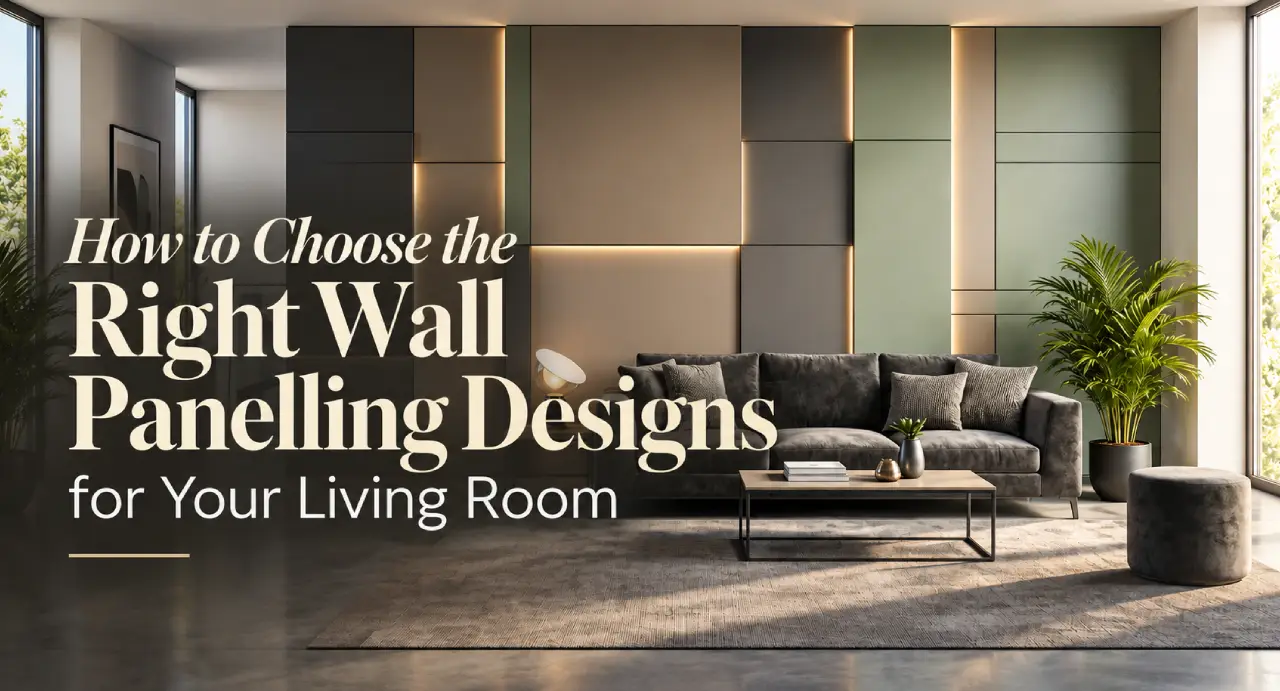
Your living room sets the tone for the entire home, and the right wall design can make the space feel warmer, more sophisticated, and visually complete. With a wide range of materials available today, homeowners can choose from wooden panelling, laminates, PVC, fabric, metal, and glass, depending on the look and functionality they want. Each material has its own character, finish, and maintenance requirements, so understanding these differences is the first step towards making the right choice.
To make that choice easier, consider how each option will work within your space. Factors such as your living room size, existing décor, lighting, maintenance needs, climate, and budget can influence the right material and design. In this guide, we explore popular wall panelling designs for living room interiors and the key factors to consider when choosing one that complements your home and lifestyle.
Why Consider Wall Panelling for Your Living Room?
Wall panelling for living room spaces can do much more than enhance the appearance of a wall. The right panel design can introduce depth, texture and character while helping create a clear focal point within the room. It can also be used to complement a TV unit, highlight the sofa wall, define an accent area or give a plain wall a more finished appearance.
From classic framed panels and elegant fluted laminates to vertical slats and contemporary geometric designs, there are plenty of ways to personalise the look. The key is to choose a design that works with the room rather than competing with it. In many interiors, a single feature wall is enough to make an impact, whether it is behind the TV, sofa, or another prominent area.
The material you select also plays an important role in the final result. Wood brings warmth, laminates offer design versatility, PVC focuses on practicality, fabric adds softness, metal creates a contemporary edge, and glass introduces a sleek, reflective finish. Understanding what each material offers makes it easier to choose a wall design that suits both your interior style and everyday needs.
Popular Types of Wall Panelling for Living Rooms
Wall panelling designs for living rooms can add texture, depth, and character while giving a plain wall a more finished look. From warm wooden panelling and versatile laminates to practical PVC, soft fabric, sleek metal, and reflective glass, each option offers a different combination of style, maintenance, and functionality. Explore these popular types to find a solution that suits your space and lifestyle.
Living Room Wooden Wall Panelling Designs
Wood remains a popular choice for homeowners who want warmth, texture, and a premium natural appearance. Wood paneling for living room walls can range from clean vertical slats and fluted profiles to classic framed panels and contemporary geometric compositions. Natural wood creates an inviting character, while wood-look surfaces can offer a similar visual language with easier maintenance.
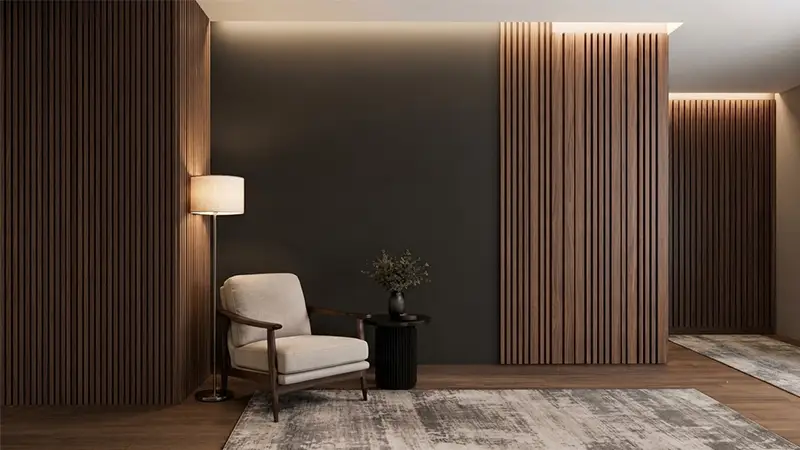
Common wood-inspired tones such as walnut, oak, and teak can complement both modern and traditional interiors. Choose wooden panelling when you want a warm, timeless feature wall and are comfortable with the maintenance requirements of the selected material and finish.
Laminate Wall Panelling Designs for Living Room
Laminate panelling is a versatile option for contemporary homes. Decorative laminates can reproduce woodgrains, stone-inspired patterns, concrete effects, solid colours and more, giving homeowners a wide range of design possibilities. They are also relatively easy to clean and suited to spaces exposed to everyday wear. When used as a wall finish over a suitable substrate, sunmica can create sleek TV backdrops, fluted combinations, contrasting panels, and minimalist feature walls.
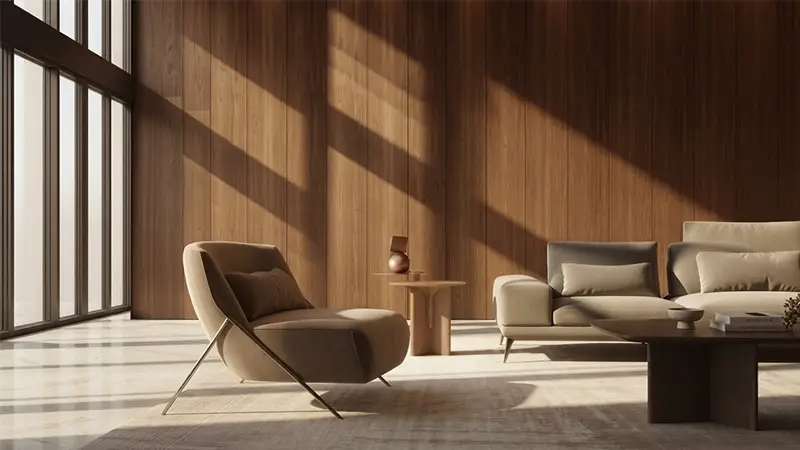
For a sophisticated look, consider combining plain and textured mica sheets rather than covering the entire wall with one pattern. Marble-inspired, matt, high-gloss, and wooden finishes can all work effectively depending on the room’s lighting and furniture. Choose wall laminates when you want greater flexibility in wall panel designs, easy routine cleaning, and a finish that complements your furniture and décor.
PVC Wall Panelling in Living Room
PVC panels are lightweight, easy to clean, and resistant to moisture, making them particularly useful where practical maintenance is a priority. They are available in smooth, textured, and embossed finishes, including wood-inspired designs. While PVC is strongly associated with moisture-prone areas such as kitchens and bathrooms, selected designs can also be used in living rooms when their appearance and installation method suit the interior.
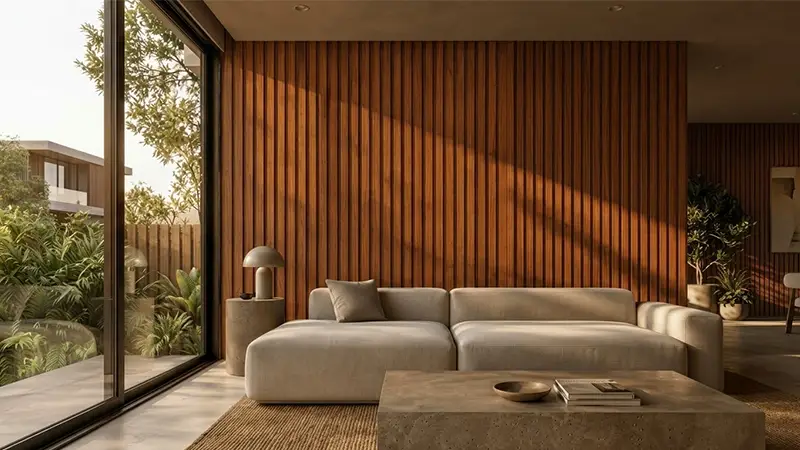
One consideration is heat exposure. Some PVC panels may be affected by excessive heat, so placement around heat-producing fixtures should be planned carefully. Choose PVC panelling when low maintenance, moisture resistance, and practicality are high on your priority list.
Fabric Modern Wall Panelling Designs Living Room
Fabric wall panelling brings a softer, more tactile dimension to the living room than hard-surface materials. Its rich texture can add warmth, comfort, and a refined touch to the interiors, creating a cosy and inviting atmosphere. It works particularly well in elegant and contemporary spaces where a subtle play of texture can enhance the overall look without making the wall feel overwhelming.
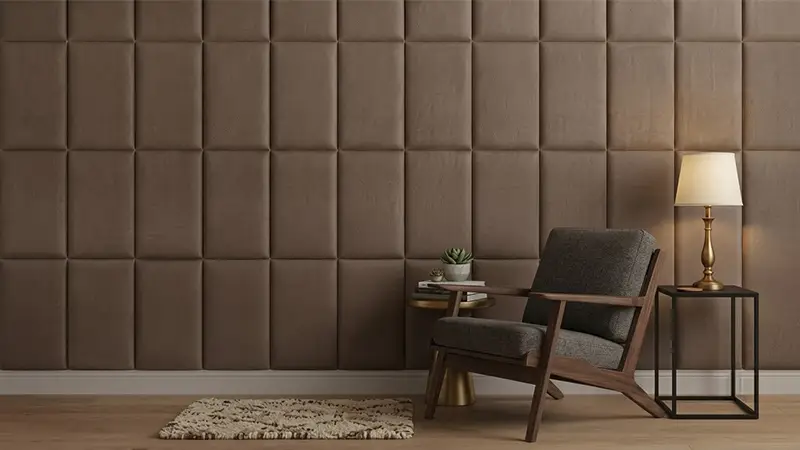
However, fabric surfaces require more careful cleaning than laminate or PVC, particularly in homes where dust accumulation and frequent spills are concerns. Choose fabric panelling when you want softness, texture and an acoustically considered interior.
Metal Wall Panelling for Living Room
Metal panels bring a distinct contemporary or industrial character to the living room. Aluminium and steel can introduce clean lines, metallic highlights and a stronger architectural presence. Metal is most effective when used selectively, for example, as an accent, border, insert or feature behind a TV unit, rather than allowing a heavy finish to dominate the entire room.
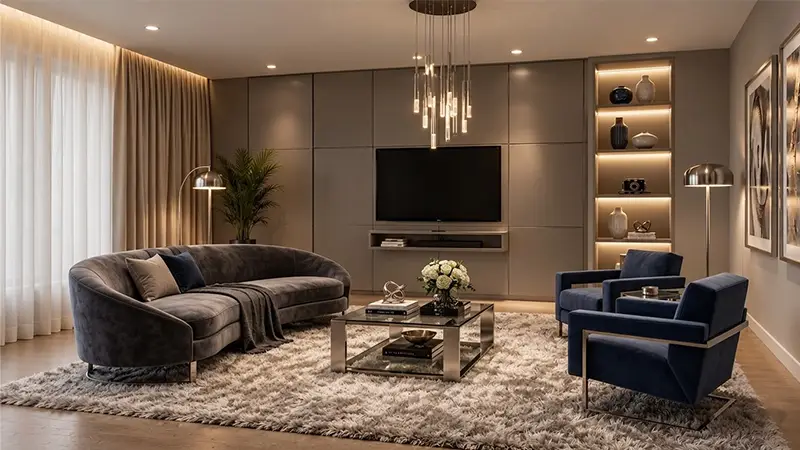
Pair metallic elements with wood, matt surfaces or neutral upholstery to create visual balance. Choose metal panelling when you want an industrial, modern or statement-led interior.
Glass Wall Panelling for Living Room
Glass panels can transform a wall by reflecting light and creating a sleek, polished appearance. Lacquered and coloured glass can be used for feature walls, while backlit glass can introduce another layer of visual interest through concealed LED lighting.
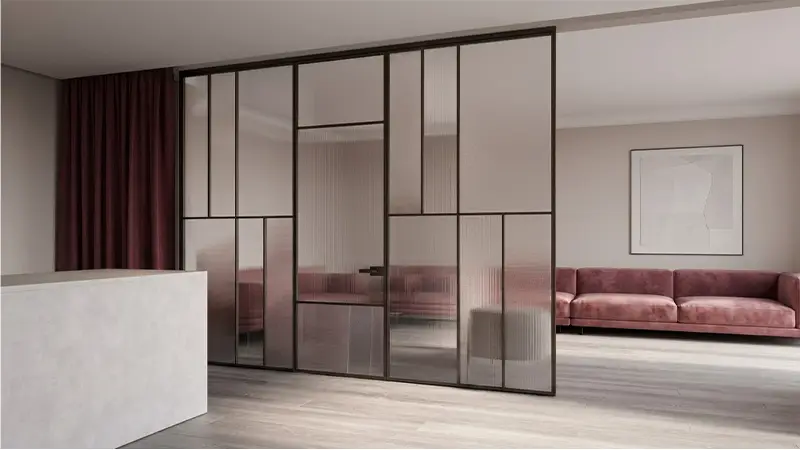
Glass can be especially effective in smaller or darker living rooms because reflective surfaces can enhance the perception of brightness and openness. Tinted mirrors and glass can also be combined with other materials for a layered wall design. Choose glass panelling when you want a contemporary, reflective, and visually premium finish.
Factors to Consider Before Choosing Wall Panelling for Living Room
Choose a wall panelling design based on your living room’s size, interior style, lighting, colour scheme, and maintenance needs. The material, pattern, scale, texture, and finish should work together to complement the overall space.
Consider the size of your living room
In a compact room, lighter colours, clean lines, and vertical profiles can help maintain an open visual feel. Larger rooms can accommodate deeper textures, darker finishes, and more elaborate geometric designs.
Identify the focal wall
A TV wall, sofa wall, or another architectural focal point is often enough. Full-room panelling can sometimes make an interior feel visually heavy, whereas one well-designed feature wall creates a clearer sense of hierarchy.
Match the finish with your lighting
Glossy and reflective finishes bounce light around the room, while matt laminates and textured surfaces create a softer, more understated appearance. Your choice should therefore consider both natural daylight and artificial lighting.
Think beyond the initial price
Wall panelling costs vary depending on the material, design complexity, wall area, base surface, finish, labour, and installation method. Since these factors can significantly influence the overall expense, it is better to consider the complete installed solution rather than comparing panel prices alone when planning your budget.
Plan installation properly
A clean, level, and dry wall surface is important for achieving an even finish. Depending on the material and system, installation may involve adhesives, screws, trims, or a supporting substrate. Complex designs, corners, and integrated lighting are best planned with experienced installers.
Conclusion
The right wall panelling design is not simply about filling an empty wall; it is about making a considered choice that fits naturally into the way your living room looks, feels, and functions. When the scale, lighting, finish, maintenance, and overall décor are taken into account, even a single well-planned wall can bring greater definition and character to the space.
Rather than following a trend or choosing a finish in isolation, think about how the wall will contribute to the atmosphere you want to create. A thoughtful combination of design and practicality can turn an everyday living room into a space that feels cohesive, comfortable, and distinctly yours.
 Laminates Business