
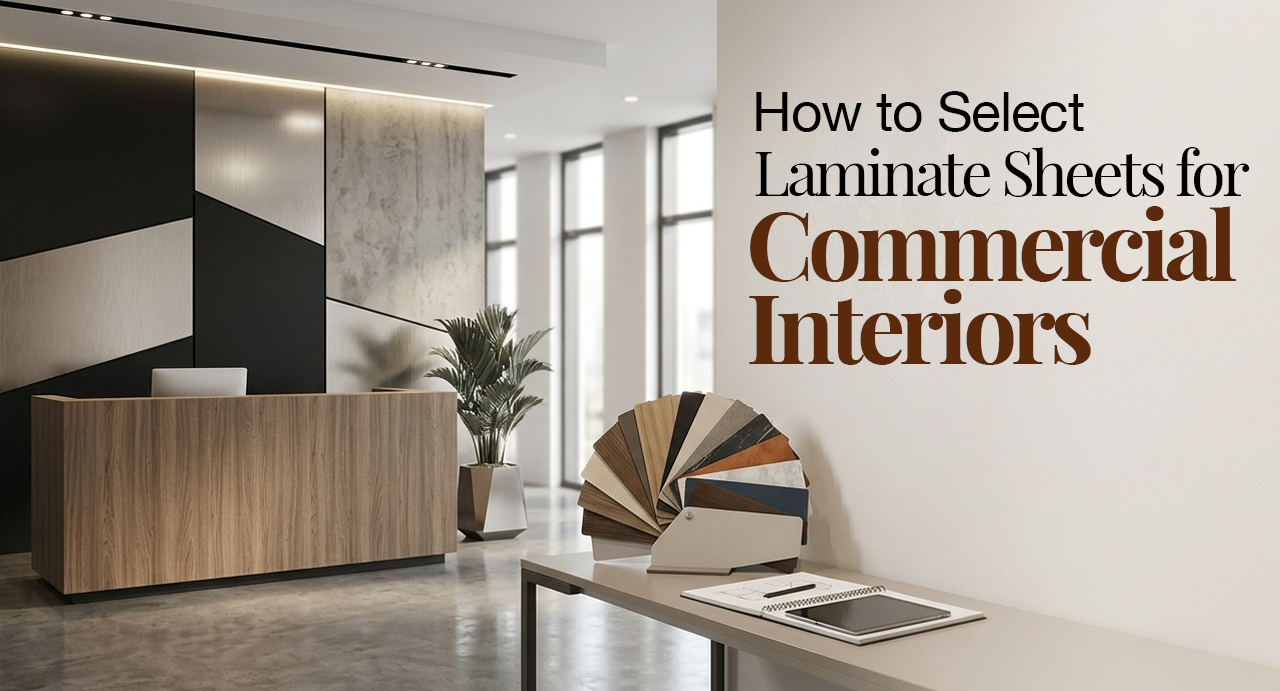
To select laminate sheets for commercial interiors, evaluate their durability, construction, application suitability, finish, and maintenance requirements. The best laminates are those that meet the demands of the space while complementing its design. Whether you are furnishing an office, retail store, hotel, or commercial facility, understanding these factors helps you choose laminate sheets that deliver the right balance of performance, appearance, and long-term value.
Assess Your Commercial Space Before Selecting Laminate Sheets
Before comparing laminate sheets, assess how the surface will be used. Workstations and reception counters experience frequent contact, while pantry furniture may face spills and moisture. Decorative wall panels have different requirements from heavily used horizontal surfaces.
Consider three factors:
- Usage intensity: Identify surfaces exposed to frequent handling, friction, scratches, and impact.
- Environmental exposure: Assess the chances of spills, moisture, and regular cleaning.
- Maintenance requirements: Choose a surface compatible with the cleaning methods used in the space.
Defining these needs first helps you select a laminate that matches the demands of the application rather than paying for unnecessary features or compromising on essential performance.
Choose the Right Type of Laminate Sheets for Commercial Use
Different laminate constructions serve different purposes. The right choice depends on the application, required performance, and supporting structure.
High-Pressure Laminates (HPL): Manufactured by consolidating resin-treated layers under heat and pressure, HPL sheet is commonly considered for workstations, reception counters, conference tables, and other demanding furniture applications. Check the specific product’s performance and intended use before selection.
Low-Pressure Laminates (LPL): Typically bonded to a supporting board during manufacture, LPL can suit cost-conscious furniture and interior applications where its declared performance meets the requirements.
Compact Laminates: These thicker, self-supporting panels may be suitable for partitions, cubicles, and applications requiring a substantial panel construction.
When comparing laminate sheets, evaluate their construction and technical specifications alongside the intended use. No single type is automatically the best choice for every commercial project.
Compare Laminate Sheet Durability and Performance Requirements
Durability determines how well a laminate surface maintains its appearance under everyday conditions. Evaluate the properties most relevant to your application rather than relying on general claims such as premium or heavy-duty.
Abrasion resistance: Important for surfaces exposed to repeated rubbing, including worktops, counters and frequently used furniture.
Scratch and impact resistance: Relevant to workstations, meeting tables and public-facing furniture where objects are moved or placed repeatedly.
Stain resistance and cleanability: Consider exposure to coffee, food, ink and cleaning products. Check the manufacturer’s maintenance instructions to ensure the surface can be cleaned appropriately.
Moisture resistance: Particularly important for pantry furniture and other areas exposed to spills. Remember that surface resistance does not make the entire assembly waterproof; substrates, joints, and exposed edges also require protection.
For demanding applications, compare the relevant test results and product classifications. Selecting laminate sheets with documented, application-appropriate performance helps reduce the risk of premature surface deterioration.
Match Laminate Sheet Specifications to the Commercial Application
Different commercial spaces require different combinations of performance and appearance.
| Commercial application | Key selection priorities |
|---|---|
| Office workstations | Scratch resistance, wear resistance and easy cleaning |
| Reception counters | Abrasion resistance, impact resistance and finish retention |
| Retail interiors | Surface durability, stain resistance and visual consistency |
| Pantry furniture | Cleanability, moisture exposure and edge protection |
| Partitions and cubicles | Panel construction, thickness and fixing compatibility |
| Healthcare and specialist facilities | Cleanability, resistance to cleaning agents, and applicable fire-safety requirements |
Use these priorities as a starting point, then confirm the specific product’s suitability against the project requirements. This application-led approach helps you select the right performance level without unnecessary expenditure.
Select Laminate Finishes That Balance Design and Daily Use
Commercial laminate sheets offer a wide variety of finishes, colours and patterns, allowing designers to create distinctive interiors while meeting functional requirements.
Choose the appropriate finish: Matt, glossy, and textured surfaces create different visual effects and maintenance considerations. Fingerprint visibility, cleaning needs, and surface durability vary by product, so assess the finish alongside its technical specifications.
Coordinate colours and patterns: Woodgrain finishes can add warmth to office furniture, stone-inspired designs can complement reception areas, and solid colours can reinforce brand identity. Select patterns that work with the flooring, walls, lighting, and surrounding materials.
Check samples before approval: View physical samples in the actual space wherever possible. Lighting can affect how a colour or texture appears, and batch consistency matters across large installations.
The goal is to achieve the intended design without overlooking the surface’s practical requirements. To explore more laminate sheet finishes, colours, and patterns for your next project, browse our laminate catalogue.
Confirm Laminate Sheet Thickness, Installation, and Total Cost
Before ordering laminate sheets, confirm the technical and installation requirements.
Thickness: Select thickness according to the laminate type, application, substrate, and manufacturer’s recommendations. Decorative sheets bonded to supporting boards and self-supporting compact panels serve different purposes.
Installation compatibility: Verify compatibility with the substrate, adhesive, fabrication method, and edge treatment. Correct installation is essential to achieving the intended performance, particularly in areas exposed to moisture.
Total cost: Compare the cost of the laminate, substrate, fabrication, installation, maintenance, and potential replacement. A lower purchase price does not necessarily translate into better long-term value.
Compare products on an equivalent specification basis, including performance, intended use, and warranty conditions. Document the approved product, finish, and thickness before fabrication to minimise errors and unwanted substitutions.
Conclusion
Selecting laminate sheets for commercial interiors means balancing the requirements of the space with verified performance, installation compatibility, and design intent. By assessing usage conditions, comparing technical specifications, and checking finishes before approval, project teams can make more informed decisions.
The right laminate is not simply the one that looks best in a sample. It is the one chosen to meet the demands of the space while maintaining its intended appearance through everyday use.
 Laminates Business