
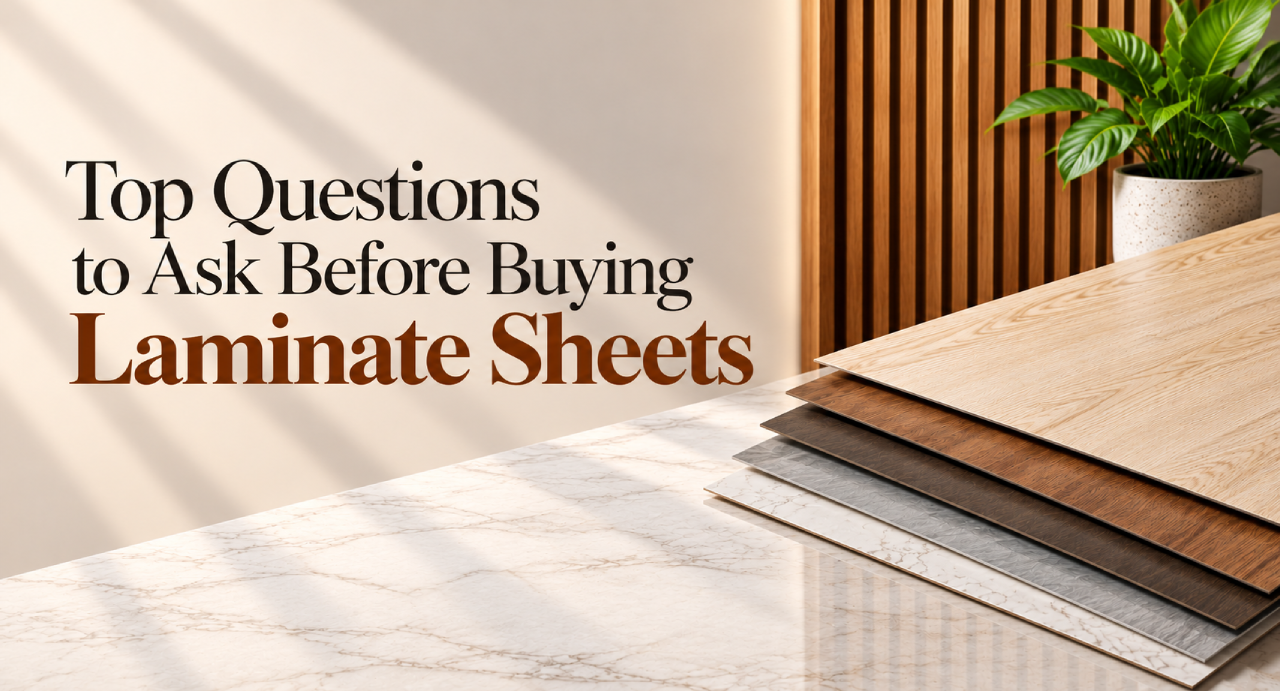
Laminate sheets are one of the most popular interior surface finishes, offering an affordable, easy-to-maintain way to enhance the look of different spaces and surfaces. With a wide range of designs, textures, colours, and brands available, finding the best laminates for your project can feel overwhelming, especially when thicknesses, finishes, and prices vary so widely.
This checklist covers the top questions to ask before buying laminate sheets, with your dealer, designer, or carpenter before placing an order. Each question includes a clear answer to help you compare options, understand what to look for, and make an informed buying decision.
What is a laminate sheet made of?
Laminate sheets are made from layers of decorative paper and kraft paper bonded together with synthetic resins under high heat and pressure. The top layer usually has a protective coating that helps resist scratches, stains, and everyday wear. These layers create a durable decorative surface used on furniture, cabinets, doors, and wall panels.
What thickness of laminate sheet do I need?
Decorative laminate sheets are available in thicknesses ranging from 0.6mm to 1.5mm for furniture and interior applications. Choose 0.6–0.8mm for vertical and low-traffic areas, 1mm for standard residential furniture, and 1.25–1.5mm for heavy-duty, high-impact surfaces.
Decorative Laminate Thickness (Furniture & Interiors)
- 0.6mm – 0.8mm (Vertical & Low-Traffic Areas): Suitable for wardrobe interiors, cabinet sides, wall panels, and lightweight decorative applications. 0.8mm is a versatile choice for residential furniture.
- 1mm (Standard Residential Use): Ideal for modular kitchen cabinets, wardrobe shutters, TV units, study desks, and everyday home and office furniture.
- 1.25mm – 1.5mm (Heavy-Duty & High-Impact Surfaces): Suitable for office desks, reception counters, commercial tabletops, and other high-use surfaces.
Tip: Choose laminate thickness based on the application, expected wear, and the manufacturer’s specifications.
Which laminate sheet finish is best for home interiors: High-gloss, matt, suede, or metallic?
The best laminate finish depends on the look you want to achieve. High gloss laminates create a sleek, reflective appearance, matt offers a subtle and understated look, suede adds a soft, premium feel, and metallic finishes bring a bold, decorative touch. Each finish creates a different visual effect, so consider your interior style and the overall look you want before making a choice.
Before finalising a laminate, check it under your room’s actual lighting. Showroom lights can change how a finish and colour appear, so view a sample in the space where it will be used.
Are kitchen laminate sheets waterproof and heat-resistant?
Kitchen laminate sheets are designed to resist everyday moisture and withstand normal kitchen conditions, but they are not completely waterproof or heatproof. Water resistant laminates can handle splashes, steam, and humidity, while prolonged water exposure at unsealed edges or joints can damage the underlying board. Similarly, laminate surfaces can tolerate moderate heat but may scorch, discolour, or crack when exposed to hot pans or open flames.
What is the price of a laminate sheet per sheet and per sq ft?
In India, the price of a standard 8×4 ft decorative laminate sheet commonly ranges from about ₹600 for basic sheets to ₹2,000 for mid-range sheets, and ₹3,000 or more for premium ranges. Divide the sheet price by 32 to get the price per sq ft.
One common source of confusion is that dealers quote per sheet while some websites quote per sq ft. An 8×4 ft sheet covers 32 sq ft. Price depends on brand, thickness, finish, texture, and special features such as anti-fingerprint or antibacterial surfaces. It also varies by city and dealer, so treat any range as a guide and get written quotes.
Which laminate brand should I choose, and how can I avoid buying low-quality laminate sheets?
Choose from the top laminate brands such as Ogaan Laminates, Greenlam, Merino, CenturyLaminates, Royale Touche, Formica India, or Durian, and check the manufacturer’s ISO 9001:2015 certification for its quality management standards. To avoid buying low-quality laminate sheets, purchase from an authorised dealer, ask for a GST invoice, and verify the brand name, design code, and product authenticity with the manufacturer. Be cautious of unusually low prices or products with inconsistent branding and labelling.
Is laminate better than veneer, acrylic, or PVC for my furniture?
For most furniture, laminate offers a good balance of affordability, durability, design options, and easy maintenance. Veneer is ideal for a natural wood finish but requires more care, while acrylic gives a premium, high-gloss look but can show fingerprints and scratches. PVC membrane finishes are a budget-friendly option for moulded or profiled furniture shutters, though heat and poor bonding can cause peeling. Choose the finish based on your budget, preferred appearance, and maintenance needs. You can also mix finishes, using laminate for everyday furniture and veneer or acrylic for decorative accents.
What warranty does a laminate sheet come with, and what does it cover?
Reputable laminate brands offer warranties that vary by brand and product range. For instance, Ogaan Laminates offers a 15-year warranty on its laminates, subject to applicable terms and conditions. Before buying, ask for the warranty details in writing and check what it covers, what it excludes, and how to make a claim.
Don’t rely on a blog or advertisement alone. Warranty periods and conditions can differ across product lines, so confirm the details for the specific laminate you choose. Keep your invoice and warranty documents safe. Proper documentation is essential if you ever need to make a warranty claim.
Which base material and adhesive should I use for laminate sheet installation?
Use a smooth, flat, and dry base such as plywood, MDF, or particle board. To fix decorative laminate sheets, use a contact adhesive, also known as laminate glue, specifically made for bonding laminate to boards.
Apply the adhesive as instructed on the product label and press the laminate evenly to prevent bubbles and peeling. For kitchens and bathrooms, choose a moisture-resistant board suitable for the application and seal exposed edges to help prevent moisture damage.
What should I check in a laminate sample before placing an order?
You should always check the actual laminate sheet or a large sample under your home’s lighting, as colours and finishes can look different in a showroom. Run your hand over the surface to assess its texture, and ask whether you can test a sample with common stains such as oil or sauce to see how easily they wipe off.
Also, confirm the availability of a matching edge band and the appropriate inner or balancing sunmica for the back of the panel. Note the exact design code, finish, and thickness to avoid mismatches during installation. Wherever possible, order all the sheets for your project together to maintain colour and design consistency across the finished surfaces.
How many laminate sheets do I need for my project?
A standard 8×4 ft laminate sheet covers 32 sq. ft. To calculate how many sheets you need, measure the total area, add 10–15% for cutting wastage, and divide by 32. Always round up to the next whole sheet.
Example:
- Total area: 90 sq. ft.
- Add 12% wastage: 101 sq. ft.
- Divide by 32: 101 ÷ 32 = 3.15
- Total required: 4 laminate sheets
Tips: Calculate each surface separately, including cabinet interiors if needed. Plan sheet joints for wider panels, and consider buying one extra sheet for future repairs.
Final word
The right laminate choice is one that balances appearance, durability, and budget without compromising on quality. A design may look perfect in the showroom, but the real value lies in how well the laminate performs after installation.
Use this checklist when comparing options, and make sure the specifications, price, and warranty are clear before placing your order. Pay equal attention to the quality of the base material and the installation, as even a good laminate can develop problems if it is poorly fitted.
A little diligence before buying can save you from costly repairs, material mismatches, and avoidable disappointment later. Choose with confidence, verify the details, and invest in a finish that delivers lasting value.
 Laminates Business