
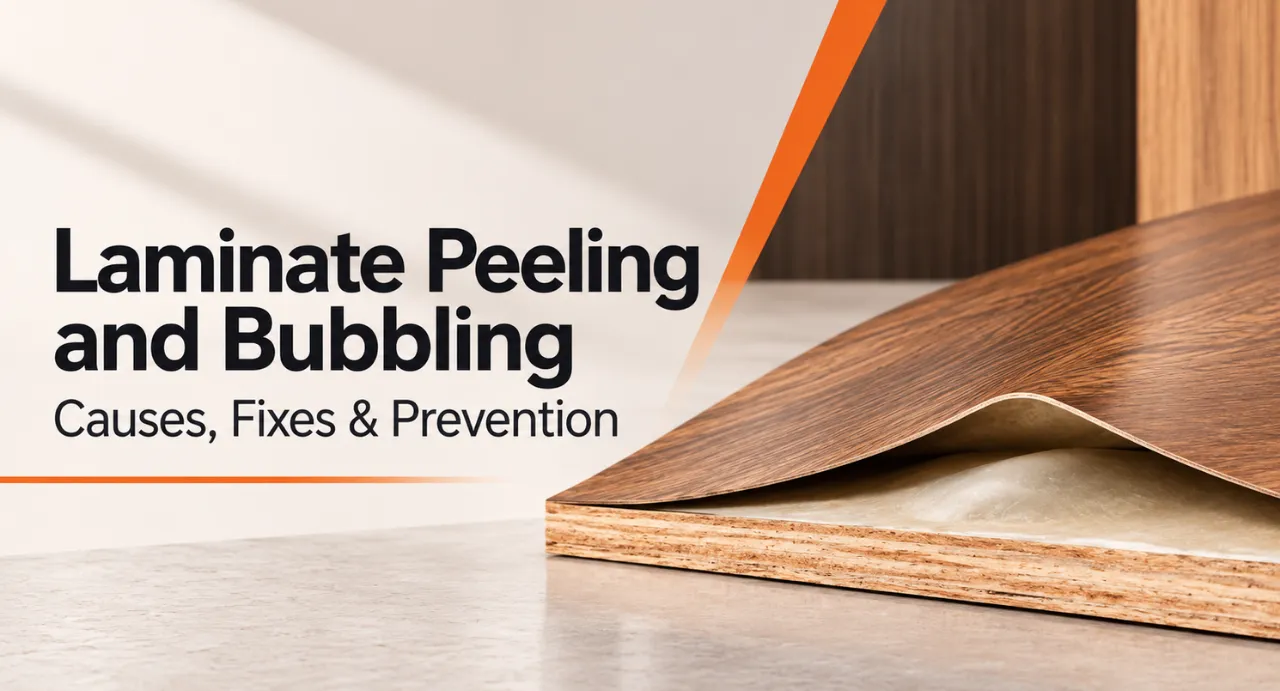
Laminate peeling and bubbling are common problems in furniture, particularly in kitchens, wardrobes and other frequently used spaces. Whether it appears as a raised bubble in the middle of a panel or a sheet lifting at the edges, the underlying issue is usually related to adhesive failure, moisture, improper surface preparation or installation.
However, not every bubble requires an entirely new laminate sheet. Understanding what has caused the problem is the first step towards choosing the right solution. For new furniture projects, selecting from the best laminates is equally important, but proper substrate preparation and installation are what help maintain a smooth, durable finish over time.
What Causes Laminate Peeling and Bubbling?
A laminate sheet depends on a strong, uniform bond with its underlying substrate, such as plywood, MDF or particle board. When that bond weakens, the surface may develop bubbles, blisters or lifted edges.
The most common causes of laminate peeling and bubbling include:
Moisture in the Substrate
Moisture is one of the leading causes of laminate bubbling and peeling. Damp plywood, MDF or particle board can expand and contract as moisture levels change, putting pressure on the adhesive bond. Water entering through exposed edges, plumbing leaks or poorly sealed joints can make the problem worse.
Incorrect Adhesive Application
Using an unsuitable adhesive, applying it unevenly or allowing insufficient drying time can prevent proper bonding. Both under-drying and over-drying can affect adhesion, depending on the adhesive type and its recommended application process.
Poor Surface Preparation
Dust, oil, sanding residue and uneven surfaces can interfere with the bond between the laminate and substrate. Even small particles trapped underneath can create gaps that eventually develop into bubbles or weak spots.
Insufficient or Uneven Pressure
Laminate requires consistent pressure during bonding to establish proper contact across the entire surface. Inadequate pressure, particularly around corners and edges, can leave air pockets or poorly bonded sections.
Excessive Heat Exposure
Repeated exposure to high temperatures can weaken the adhesive bond and contribute to bubbling. This is particularly relevant for kitchen surfaces located close to cooking appliances, ovens and other heat-producing equipment.
Poorly Sealed Edges
Unprotected edges allow moisture to enter the substrate and gradually weaken the bond. This is particularly common around kitchen cabinet laminate designs, sink units and furniture exposed to frequent cleaning or damp conditions.
How to Identify the Cause of Laminate Peeling or Bubbling
Identifying where the laminate damage begins can help determine the underlying problem and whether the surface can be repaired.
| Visible Problem | Likely Cause |
|---|---|
| Laminate peeling at corners | Insufficient adhesive or pressure |
| Edges lifting near sinks | Moisture entering exposed edges |
| Bubbles in the middle | Trapped air or uneven adhesive application |
| Widespread hollow patches | Poor bonding or extensive adhesive failure |
| Swollen or uneven substrate | Prolonged moisture exposure |
| Bubbling near heat sources | Repeated exposure to excessive heat |
A simple way to assess the affected area is to tap the surface gently. A hollow or noticeably different sound may indicate an area where the laminate has lost contact with the substrate. Also inspect the surrounding board for swelling, softness or visible water damage.
It is important to distinguish between a failed adhesive bond and a damaged substrate. Both can look similar on the surface, but they require different solutions.
How to Fix Peeling and Bubbling Laminate
The right laminate repair depends on the extent of the damage and the condition of the underlying board.
1. Inspect the Affected Area
Identify whether the problem is limited to a corner, an edge or a larger section. Check for cracks, moisture damage and swelling before attempting a repair.
2. Check the Substrate Condition
If the underlying board is dry, firm and structurally sound, a small area of peeling may be repairable. However, swollen, soft or crumbling boards generally require replacement.
3. Reapply a Suitable Adhesive
For small areas with an intact laminate sheet, a compatible adhesive designed for the particular laminate and substrate may be used. The loose section must be handled carefully, and the adhesive manufacturer’s instructions regarding application and drying time should be followed.
4. Apply Even Pressure
Once the adhesive is applied, the affected section needs uniform pressure using an appropriate roller or flat pressing surface. Allow the adhesive to cure fully before using the furniture.
5. Replace Severely Damaged Sections
If the sunmica has extensive bubbling, widespread delamination, cracks or an underlying board that has swollen, replacing the affected panel is usually more reliable than repeated repairs.
Avoid using random household adhesives or applying direct heat without manufacturer-approved instructions, as these methods can damage the decorative surface or cause the problem to return.
How to Prevent Laminate Peeling and Bubbling
Preventing installation-related problems is considerably easier than repairing damaged furniture laminates later. The following practices help maintain a reliable bond and a longer-lasting laminate finish.
- Choose the right substrate: Use a flat, dry and suitable board for the intended application. For areas exposed to moisture, consider suitable moisture-resistant substrates and water resistant laminates to provide an additional layer of protection.
- Prepare the surface properly: Remove dust, oil and other contaminants before applying adhesive. Ensure that both bonding surfaces are suitably conditioned.
- Use compatible adhesives: Select an adhesive suited to the laminate, substrate and installation conditions. Always follow the specified application and drying requirements.
- Maintain uniform pressure: Ensure proper contact across the entire panel, working from the centre towards the edges to minimise trapped air.
- Seal all exposed edges: Use suitable edge banding and seal vulnerable joints to reduce moisture penetration.
- Allow proper curing: Avoid handling or installing the panel before the adhesive has achieved the required bond strength.
- Protect against heat and moisture: Keep furniture away from excessive direct heat and promptly address water leaks or standing moisture.
Following these precautions during fabrication and installation significantly reduces the likelihood of premature laminate peeling and bubbling.
Conclusion
A durable laminate finish is not determined by the decorative sheet alone. It depends on the quality of the substrate, the compatibility of the adhesive and the precision of the installation process. Even a high-quality laminate can develop problems when these underlying factors are overlooked. The key is to address the cause rather than simply cover up the visible damage.
By using suitable materials, maintaining proper bonding conditions and protecting exposed edges, homeowners and furniture professionals can minimise laminate installation issues and preserve the appearance of their furniture for years to come. A smooth, seamless finish begins long before installation, with quality and precision embedded at every stage of the laminate manufacturing process. It starts with the decisions made beneath the surface.
 Laminates Business