
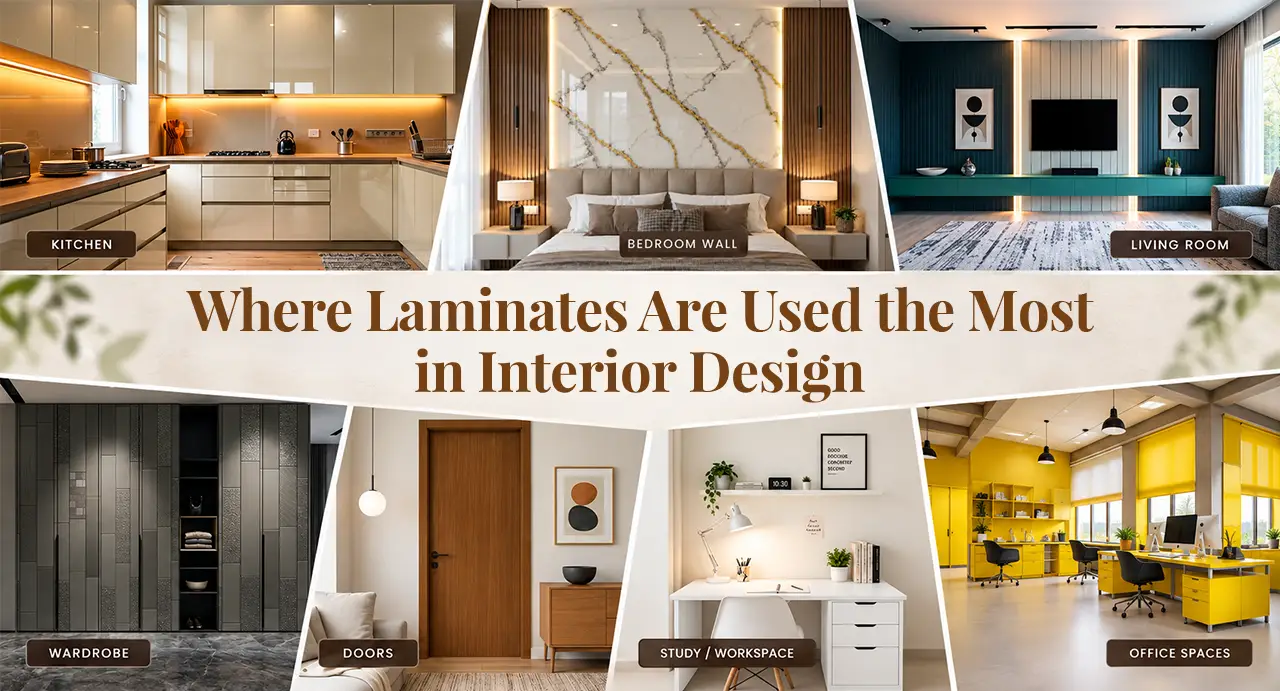
When we think about designing an interior, furniture, lighting, and colour often take centre stage. Yet it is the surfaces that bring many of these elements together and give a space its finished character. This is where laminates have found a strong place in interior design, offering designers a practical surface that can be adapted across different parts of a space. From cabinetry and wardrobes to doors, walls, tables, TV units, and workstations, its applications extend well beyond a single room or purpose.
What makes it work across such varied applications is the flexibility to choose finishes, textures, colours, patterns, and designs according to the space. At the same time, its practical qualities make it suitable for surfaces that experience regular use. With so many possibilities, laminates can play a different role in each setting, depending on what the surface needs and how it contributes to the overall interior.
Top 7 Interior Spaces Where Laminates Are Most Commonly Used
Here’s a closer look at where laminates are most commonly used and how they fit into different spaces.
Kitchen Cabinets
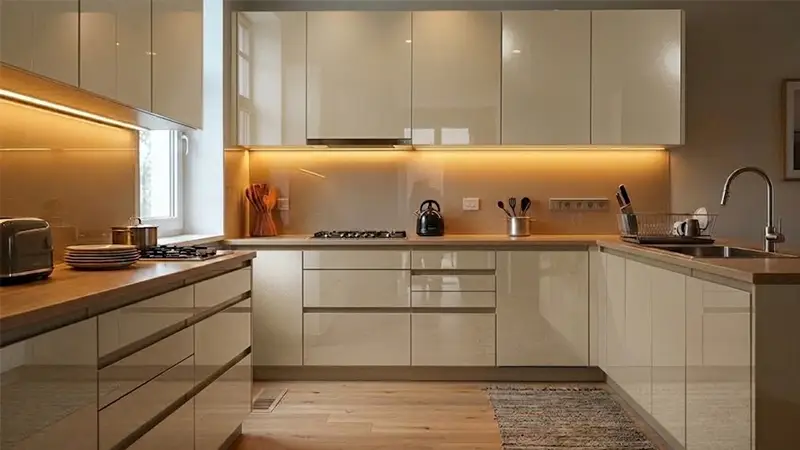
Kitchen cabinets are one of the most common applications for laminates, particularly on shutters, drawer fronts, and cabinet doors. These surfaces are exposed to frequent handling, spills, splashes, cleaning, and everyday wear, making a durable and easy-to-maintain finish is important. Laminates offer both the practicality required in a busy kitchen and the design flexibility to complement different interiors. From matt and high gloss laminates to wood, stone, and textured patterns, they can be used to create anything from warm and traditional kitchens to sleek, contemporary spaces.
Wardrobes

Wardrobes are another common application for laminates, particularly across shutters, panels, and built-in storage. Since they occupy a significant visual area in a bedroom, the surface finish can play an important role in shaping the overall look of the space. Laminates offer a wide range of wood grains, solid colours, neutrals, and textures, making it easy to coordinate wardrobes with the rest of the interior. Their easy maintenance and everyday durability also make them well suited to frequently used storage surfaces.
Doors

Interior doors are another practical application for laminates, with surfaces that are regularly touched, opened, and cleaned. Laminates can add colour, texture, and a refined finish to doors while providing a surface that is easy to maintain and suited to everyday use. From warm wood grains to solid colours, textured patterns, and matt finishes, they offer plenty of scope to complement the style of the surrounding interior. Using laminate on doors can also help create a cohesive look by coordinating them with wardrobes, furniture, wall panels, or other surfaces in the space.
Bedroom Wall

Bedroom walls are an increasingly popular application for laminates, particularly when used to create feature walls or add character to larger surfaces. In bedrooms, laminate can be used for TV backdrops, bed wall panels, accent areas, or full wall treatments, helping introduce texture and visual depth without making the space feel heavy. Wood grains, stone-inspired designs, fluted textures, and other decorative patterns can complement the furniture and flooring, while offering an easy-to-maintain surface for everyday interiors.
Tables

Tables are well suited to laminate because their surfaces are exposed to regular contact, spills, and everyday use. Laminates can be used on study tables, dining tables, side tables, work desks, and other furniture surfaces, offering a durable finish that is easy to clean and maintain. Their wide range of colours, patterns, textures, and finishes also makes them easy to coordinate with the surrounding interior, whether the table is designed to blend in or make a visual statement.
TV Unit Living Room

TV unit designs are a prominent feature in living rooms, making them a natural place to use laminates for both functionality and visual appeal. Laminates can be applied to cabinet fronts, shelves, storage sections, and the backdrop of the unit, creating a cohesive finish across the entire setup. Wood grains, marble-inspired patterns, textured surfaces, and solid colours can be combined to add depth and character while keeping the TV area integrated with the overall living room design.
Office Workstations

Office workstations are designed for regular, intensive use, making durable and easy-to-maintain surfaces an important consideration. Sunmica sheet can be used across desktops, storage units, partitions, and other workstation furniture, helping create a consistent look throughout the workspace. From understated neutral finishes to subtle woodgrains and contemporary textures, sunmica offers design flexibility while providing a practical surface suited to the demands of a busy office environment.
Why Are Laminates So Common in Interior Design?
Laminates are popular because they make it easier to combine everyday practicality with the look you want. A single material category can work across kitchens, wardrobes, furniture, walls, and workspaces, while offering a wide range of colours, wood grains, textures, and finishes.
For homeowners and designers, this variety makes it easier to maintain a consistent look across different parts of an interior. Sunmica is also relatively easy to maintain, making it suitable for surfaces that are regularly touched, cleaned, or exposed to everyday use.
However, the real advantage is choice. You can select a finish based on how a surface will be used rather than compromising on appearance. A busy kitchen may call for a practical, easy-care finish, while a bedroom wardrobe may be chosen mainly for its texture and visual appeal. Understanding these differences helps you get more value from your laminate selection.
How to Choose the Right Laminate for Each Space
Choosing a laminate becomes much easier when you start with the surface rather than the colour. Think about what the surface will experience every day, then narrow down your design options.
The right laminate depends on where it will be used and what the surface needs to withstand. In kitchens, look for options suited to frequent cleaning, spills, moisture, and regular handling. For wardrobes and cabinets, consider everyday use, ease of maintenance, and how the finish complements the bedroom or living space. Study tables and office workstations need surfaces that can handle regular wear, while walls and TV units offer more flexibility to focus on colour, texture, pattern, and overall visual impact.
You should also consider lighting before making a final choice. A dark or heavily textured laminate can look very different in a bright room compared with a space that receives limited natural light. When comparing options, look at the finish, texture, colour, intended application, and product specifications together instead of choosing based on appearance alone.
A well-organised laminate catalogue can make this process easier by helping you compare designs according to room, application, finish, and style. This allows you to shortlist options that not only look right but also suit the way the space will actually be used.
Conclusion
From one space to another, the role of laminates changes with the surface they are applied to. In kitchens and wardrobes, they become part of essential storage; on doors and walls, they contribute to the character of a room; and on study tables, TV units, and workstations, they become part of furniture that is used every day.
Looking at these applications shows just how naturally laminates fit into the different layers of an interior. Their use is not limited to one type of room or surface, but extends wherever a considered surface finish is needed. Understanding these applications can help homeowners, designers, and architects make more informed choices for each part of a space.
 Laminates Business