
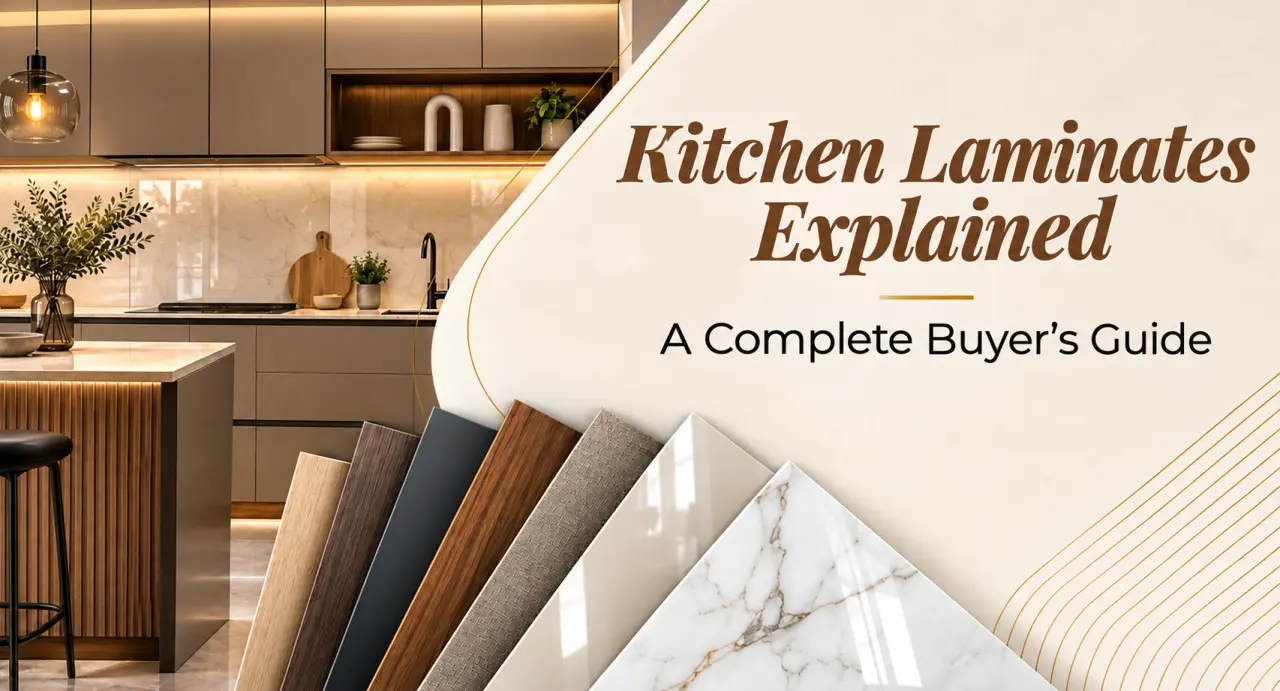
Planning a new kitchen or remodeling an existing space requires choosing materials that balance daily practicality with a clean look. While solid wood and natural stone offer high-end style, they come with high costs and intensive maintenance. Kitchen laminates provide a practical alternative by delivering luxury finishes at a fraction of the cost, with reliable resistance to moisture, heat, and everyday wear.
When selecting the best laminates for your culinary space, understanding technical specifications is key to ensuring long-term performance. This guide covers everything you need to know about selecting the right thickness, finish types, color combinations, and maintenance rules for your kitchen cabinets.
Why Choose Kitchen Laminates for Modern Cabinets?
- High-End Look on a Budget: Get the rich look of luxury materials like natural stone, warm walnut, or modern matte charcoal at a fraction of the cost of real wood or marble.
- Water & Moisture Safe: Unlike natural wood or painted surfaces, high-grade kitchen laminates do not absorb water, grow bacteria, or swell up from kitchen steam and ambient humidity.
- No Fading or Yellowing: Colors stay bright, consistent, and fresh for years under intense kitchen lights and sunlight, avoiding the yellowing common with painted finishes.
- Resistant to Dents & Heat: Sturdy surface layers handle daily kitchen activity far better than thin plastic wraps, easily resisting bumps from heavy cookware and warm mugs (though trivets remain recommended for hot pots).
- Ready to Use Instantly: Unlike paints or site-applied finishes that take days to cure in a dust-free environment, factory-laminated shutters are ready for installation immediately.
- Clean, Chipped-Free Edges: When paired with proper edge banding, laminate edges are smoothly sealed to lock out moisture and prevent peeling or surface chipping.
Types of Kitchen Cabinet Laminates for a Modern Look
When browsing through a modern laminate catalogue, a diverse range of laminate finishes is available for modern kitchen cabinets, each offering a distinct aesthetic and practical advantage. Glossy kitchen laminates produce a smooth, reflective surface that brightens the room, while matt finishes deliver a subtle, non-glare surface. Acrylic kitchen laminates provide a mirror-like, ultra-reflective sheen for maximum luxury, and high-pressure laminates (HPL) deliver exceptional structural resilience for heavy-duty cooking environments.
1. Glossy Kitchen Laminates for a Sleek and Stylish Finish
- The Look: Offers an opulent, shiny surface that intensifies both natural and artificial lighting.
- The Benefit: Gives the visual impression that the kitchen is brighter, more spacious, and modern.
- Popular Choices: Frosty white for a minimalist appearance, black shimmer for contemporary appeal, and dark blue for a striking statement.
- Why It Works: Beyond visual appeal, high-gloss surfaces are stain-resistant and fast to wipe down, making them a practical choice for overhead cabinets in busy kitchens.
2. Matt Kitchen Laminates for a Soft and Sophisticated Look
- The Look: Features a muted, non-reflective surface that provides a subtle, cozy, and high-end appearance.
- The Benefit: Highly effective at resisting smudges, fingerprints, dust, and minor surface scratches, keeping daily maintenance minimal.
- Popular Choices: Grey or dark walnut for neutral charm, or dark oak for subtle organic warmth.
- Why It Works: They offer a silky, sophisticated texture that looks elegant across all cabinets or when paired with glossy uppers for contrast.
3. Acrylic Kitchen Laminates for an Ultra-Modern, Mirror-Like Finish
- The Look: Features a glass-like reflective surface that brings an ultra-luxurious, premium edge to contemporary spaces.
- The Benefit: Provides intense color depth and a vibrant sheen that resists fading and discoloration over time.
- Popular Choices: High-reflectance solid whites, deep charcoals, and striking monochromatic tones.
- Why It Works: Acrylic surfaces elevate simple slab cabinet designs into high-end design statements while remaining moisture-resistant and easy to clean.
4. High-Pressure Kitchen Laminates for Durability and Strength
- The Look: Heavy-duty decorative surfaces engineered for maximum resilience, often mimicking sleek solids, natural textures, or refined metallic tones like Biscuit Metallic.
- The Benefit: Produced by fusing multiple layers under intense heat and pressure, creating an exceptionally dense core.
- Why It Works: Sourcing from a certified laminate manufacturer guarantees that HPL sheets meet strict durability standards. They are the ultimate choice for high-impact kitchen zones due to superior resistance to heat, heavy moisture, and daily wear and tear.
Factors to Consider for Kitchen Laminates
Selecting laminates for your kitchen goes beyond choosing colors or patterns. Because kitchens are high-moisture, high-traffic zones exposed to heat, oil, and steam, materials must be evaluated based on thickness, surface resistance, and core construction.
0.8mm vs. 1mm Laminates: Which Thickness Is Right for Kitchens?
- The Verdict: For high-use kitchen cabinet shutters and drawers, 1mm laminates are a preferred choice when added thickness, rigidity, and durability are priorities. 0.8mm laminates remain a practical option for applications where a lighter, value-oriented solution is preferred.
- Why 1mm? 1mm laminates offer a more robust multi-layer construction (kraft paper base, phenolic resin, melamine layer, decorative film, and protective overlay), providing added thickness and a premium, heavy-duty feel.
- Long-Term Value: 1mm laminates have a slightly higher material cost upfront; their added thickness and rigidity can make them a worthwhile choice for frequently used kitchen surfaces.
For more information, read our complete guide on 0.8mm vs 1mm laminates.
Decorative Laminates vs. PVC Laminates: Scratch Resistance
- The Key Difference: Decorative laminates offer a durable, hard-wearing surface that is well suited to the everyday demands of kitchen shutters and cabinetry.
- Why Decorative Laminates? Their robust surface construction provides good resistance to everyday scratches, scuffs, and wear, helping maintain the finish and appearance of kitchen surfaces over time.
- The Concern with PVC: PVC laminates are generally softer and more flexible, which can make their surfaces more susceptible to visible scratches and marks with regular use.
- Pro-Tip at the Shop: Always compare catalogue samples for surface finish, texture, and scratch resistance. For busy kitchens, look for a laminate that combines strong surface durability, easy maintenance, and lasting visual appeal.
Textured vs. Smooth Finishes: The Maintenance Rule
- Avoid: Deep wood grains, pronounced ridges, and heavily textured 3D finishes, whether wood grain, stone effect, or solid, in areas directly exposed to cooking activity.
- Opt For: Flat, solid colour laminates with smooth finishes that create a cleaner appearance and make routine maintenance significantly easier.
- Why? Cooking generates airborne grease, oil vapour, spice particles, and steam, which can settle into deeper surface textures. Over time, these grooves can make cleaning more demanding and require additional effort to maintain a clean, well-finished surface.
Uni Core / Color Core Laminates vs. Decorative Laminates: Do You Need Them?
- What is Uni Core / Color Core Laminate? Uni Core / Color Core is a specialty laminate where the internal layers are matched to the surface colour, helping create a more seamless appearance at exposed edges.
- The Practical Choice: For kitchen shutters, standard decorative laminates can offer a more cost-effective solution without compromising the overall finished appearance.
- Why? Kitchen shutters are typically finished with edge banding along the sides, covering the exposed edges of the laminate and substrate. Since these edges are concealed, the colour-through construction of Color-Core laminates generally offers limited visual benefit in this application.
- Save Where It Matters: Choosing decorative laminates for kitchen shutters can help achieve the desired design and finish while avoiding the additional cost of a specialty Uni Core / Color Core sheet where its edge-colour advantage is not required.
Essential Checklist: Summary Factors for Kitchen Laminates
| Feature | Recommendation | Why? |
|---|---|---|
| Designs | Gloss, Minimal Solids, Matt, & Acrylic | Delivers a clean, contemporary look while staying effortless to wipe down and maintain. |
| Thickness | 1mm | Offers greater rigidity, a robust feel, and enhanced durability for frequently used kitchen cabinets and drawers. |
| PVC Check | Scratch-test before buying | Standard PVC laminates easily catch visible surface scratches from tools and cookware. |
| Texture | Smooth / Flat Surfaces | Deep textures trap airborne oil, grease, and grime, making cleaning difficult. |
| Core Type | Decorative Laminates | Edge banding conceals core edges on shutters anyway, making color-core an unnecessary cost. |
Popular Kitchen Laminate Colours for Modern Kitchens
Choosing the right colour for your kitchen laminates can significantly influence the overall look and feel of the space. From timeless whites and warm wood tones to bold blues and contemporary greys, these are some of the most popular kitchen laminate colours for modern cabinets:
Frosty White Kitchen Laminates
- The Look: Clean, bright, and timeless, with a crisp appearance that works well across modern kitchen styles.
- Why It’s Popular: Frosty white laminates reflect light and can make smaller kitchens feel more open and spacious.
- Best For: Minimalist, contemporary, and compact kitchens.
Deep Charcoal Kitchen Laminates
- The Look: A sophisticated dark grey with a bold, contemporary character.
- Why It’s Popular: Deep charcoal laminates add depth to kitchen interiors while offering a practical, modern alternative to pure black.
- Best For: Modern kitchens, especially lower cabinets and kitchen islands.
Walnut Kitchen Laminates
- The Look: Rich brown tones inspired by natural walnut wood.
- Why It’s Popular: Walnut laminates bring warmth and an organic feel to the kitchen while maintaining a refined, contemporary appearance.
- Best For: Kitchens that need a warmer, natural-looking cabinet finish.
Blue Kitchen Laminates
- The Look: A deep, statement-making blue that adds character and visual depth.
- Why It’s Popular: Blue laminates offer a distinctive alternative to conventional neutrals without appearing overly bright or casual.
- Best For: Kitchen islands, base cabinets, or accent shutters in contemporary kitchens.
Grey Kitchen Laminates
- The Look: A soft, muted grey that creates a balanced and understated appearance.
- Why It’s Popular: Grey laminate is versatile, works well with a variety of kitchen materials, and provides a contemporary neutral backdrop.
- Best For: Modern modular kitchens where a subtle, sophisticated colour is preferred.
Beige Kitchen Laminates
- The Look: Warm and neutral, ranging from soft cream to earthy beige tones.
- Why It’s Popular: Beige laminate creates a welcoming appearance and can make a kitchen feel warmer than cooler whites and greys.
- Best For: Contemporary, transitional, and warm-toned kitchen interiors.
Black Kitchen Laminates
- The Look: Bold, dramatic, and distinctly modern.
- Why It’s Popular: Black laminates create strong visual contrast and give simple cabinet designs a sophisticated appearance.
- Best For: Statement kitchens, kitchen islands, and modern interiors with lighter walls or countertops.
Kitchen Laminate Price: How Much Do Kitchen Laminates Cost?
Kitchen laminate prices vary depending on the laminate type, thickness, finish, design, brand, size, performance properties, and overall quality. As a general starting point, kitchen laminates can cost around ₹1,350 to ₹5,500 per sheet, while premium options from Ogaan Laminates start at around ₹1,699 per sheet.
Prices can differ significantly between standard and premium laminates. Decorative finishes, HPL, textured surfaces, anti fingerprint finishes, and other specialised options may fall into different price ranges based on their specifications and features. The overall project cost can also vary depending on whether you are purchasing laminate sheets alone or opting for complete cabinetry. In a complete kitchen project, additional costs may include the substrate, cutting, edge treatment, adhesives, fabrication, hardware, and installation.
 Laminates Business