
Laminates are easy to maintain, but proper cleaning is essential to keep them looking their best. Whether used on kitchen cabinets, wardrobes, furniture, doors, or countertops, laminate surfaces are exposed to dust, grease, fingerprints, moisture, and everyday wear that can affect their appearance over time.
While laminates are durable and designed for daily use, using harsh chemicals, abrasive cleaning materials, or excessive moisture can damage the surface and reduce its lifespan. Understanding how to clean laminate surfaces correctly helps preserve their finish, appearance, and long-term performance.
As a laminate manufacturer, Ogaan Laminates often receives questions about the best way to clean and maintain different types of laminate surfaces. This guide answers those questions by explaining safe cleaning methods for laminate furniture, cabinets, cupboards, doors, countertops, gloss laminates, and matt finish laminates, along with practical maintenance tips to help keep them looking new for years.
What to Use for Cleaning Laminate Surfaces
Most laminate surfaces can be cleaned using simple household cleaning materials. Using the right cleaning products helps remove dust, fingerprints, grease, and everyday residue without affecting the laminate’s finish.
Recommended Cleaning Materials
- Soft microfiber cloth
- Non-abrasive sponge
- Mild soap or diluted dishwashing liquid
- Clean lukewarm water
- Soft lint-free cloth for drying
For routine cleaning, a microfiber cloth and a mild soap solution are usually sufficient to keep laminate surfaces clean and well-maintained.
Step-by-Step Process for Routine Laminate Cleaning
Regular laminate cleaning involves removing dust, fingerprints, grease, stains and everyday residue without affecting its finish. Following these easy steps regularly helps maintain the appearance and cleanliness of laminate furniture, cabinets, cupboards, doors, countertops, and other interior surfaces.
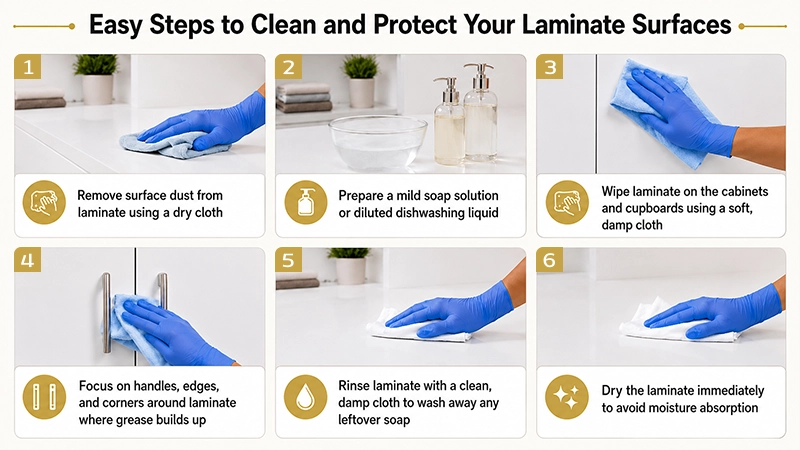
1. Remove Surface Dust
Begin by removing loose dust and dirt from the laminate surface using a dry microfiber cloth. This prevents dust particles from spreading across the surface during cleaning.
2. Prepare a Mild Cleaning Solution
Mix a small amount of mild soap or dishwashing liquid with clean, lukewarm water. Avoid using harsh chemical cleaners or highly concentrated cleaning solutions.
3. Wipe the Laminate Surface
Dip a soft cloth into the cleaning solution and wring out excess water. Gently wipe the laminate surface using smooth, even strokes to remove fingerprints, stains, and everyday residue.
4. Pay Attention to High-Touch Areas
Focus on handles, edges, corners, and frequently used areas where grease, fingerprints, and dirt tend to accumulate more quickly.
5. Remove Any Remaining Residue
Use a clean, damp cloth to wipe away any remaining soap residue and leave the surface clean.
6. Dry the Laminate Surface Thoroughly
Finish by drying the laminate with a soft, lint-free cloth. Removing excess moisture helps maintain the appearance of the surface and prevents water from remaining around edges and joints.
Following these steps regularly helps keep laminate surfaces clean, well-maintained and free from dust, grease, fingerprints, and light stains.
How to Clean Different Laminate Applications
Although the basic cleaning principles remain the same, different laminate applications are exposed to varying levels of grease, moisture, dust, and handling. A few application-specific considerations can help maintain their appearance and longevity.
How to Clean Laminate Kitchen Cabinets
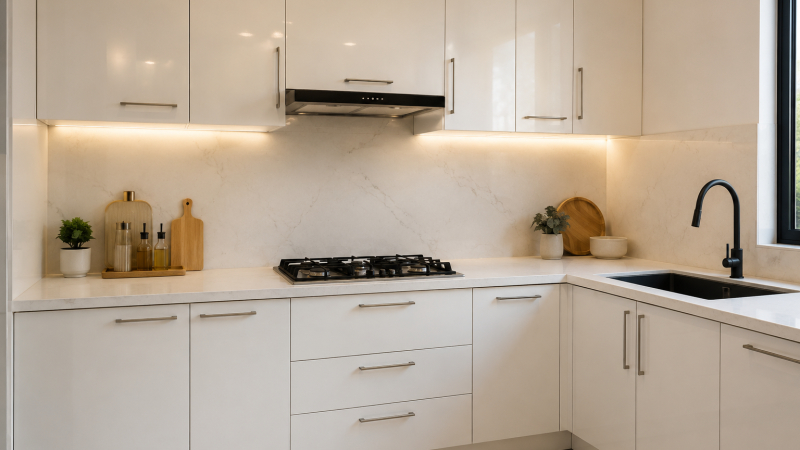
To clean laminate kitchen cabinets, remove cooking grease, food splashes, and fingerprints before they build up, particularly around handles, cooktops, and sink areas where residue accumulates most quickly.
- Wipe surfaces regularly to prevent grease build-up.
- Clean areas around handles, cooktops, and sinks more frequently.
- Remove food stains and splatters as soon as they occur.
- Finish by drying surfaces to avoid moisture accumulation.
How to Clean Laminate Countertops
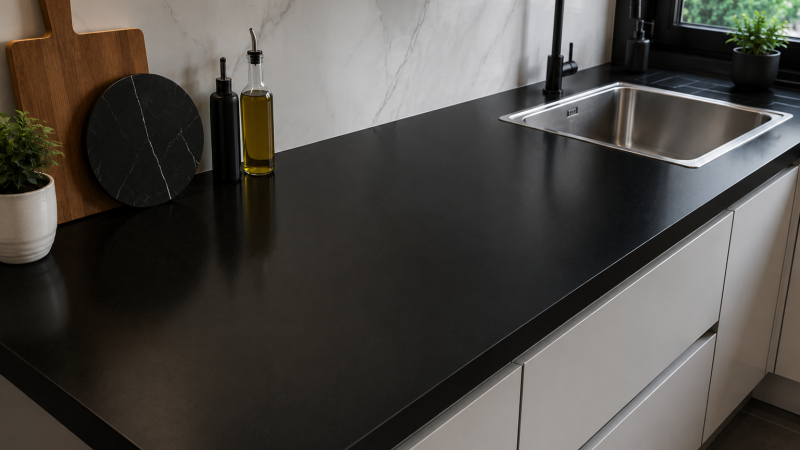
To clean laminate countertops, wipe away spills, crumbs, and water immediately after use, paying close attention to sink cut-outs and frequently used preparation areas.
- Wipe spills immediately to prevent staining.
- Keep sink edges and joints dry after use.
- Clean the surface after food preparation to remove residue.
- Avoid leaving wet items on the surface for extended periods.
How to Clean Wardrobe Laminates

To clean wardrobe laminates, regularly remove settled dust and fingerprints from exterior surfaces and keep enclosed interiors dry to prevent moisture retention and stale odours.
- Dust exterior surfaces regularly with a soft cloth.
- Wipe fingerprints and marks as they appear.
- Air wardrobe interiors periodically to maintain freshness.
- Ensure shelves and corners remain dry and free from moisture.
How to Clean Laminate Furniture
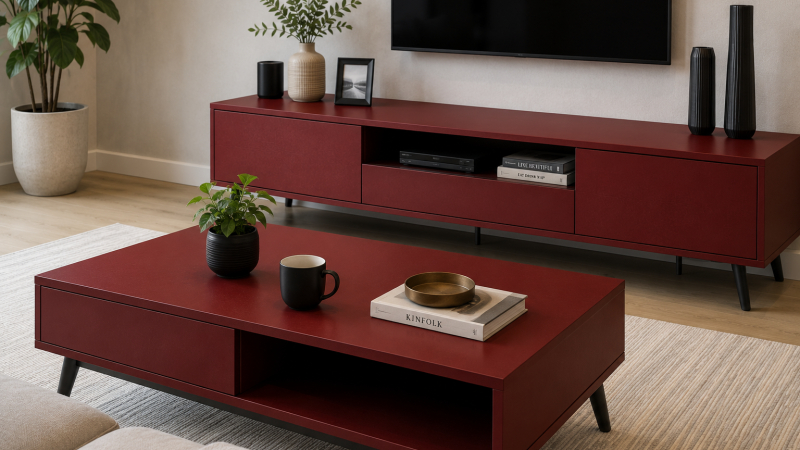
To clean laminate furniture, clear away dust, fingerprints, beverage rings, and minor spills from frequently used surfaces such as tables, study desks, TV units, and storage cabinets.
- Always clean laminate surfaces frequently to prevent dirt build-up.
- Wipe spills and beverage rings promptly.
- Clean high-touch areas such as table edges and drawer fronts regularly.
- Avoid allowing residue from decorative items to remain on the surface.
How to Clean Laminate Doors
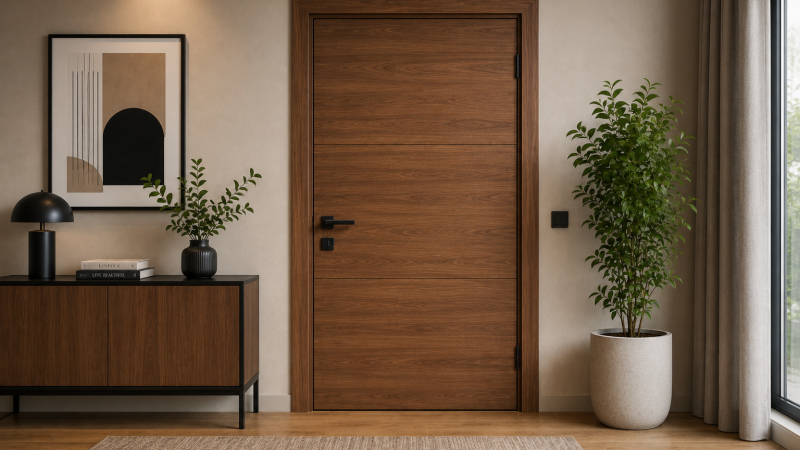
To clean door laminates, focus on removing fingerprints, hand marks, and accumulated dust, especially around handles, locks, edges, and other high-contact areas that are touched repeatedly throughout the day.
- Clean handles, locks, and edges more often than door panels.
- Remove fingerprints and smudges before they become visible.
- Remove dust from exterior-facing doors regularly to prevent particle build-up.
- Wipe away moisture near entrances during rainy or humid conditions.
How to Clean Different Laminate Finishes
Different laminate finishes respond differently to fingerprints, moisture, and cleaning methods. Following finish-specific cleaning practices helps preserve the original look of high gloss and matt finish laminates and prevents avoidable surface marks.
How to Clean Gloss Laminate
To clean high gloss laminate, remove fingerprints, smudges, and dust using gentle cleaning methods that maintain the surface’s reflective appearance and help prevent streaking.
- Use a soft microfiber cloth.
- Apply minimal moisture during cleaning.
- Always finish with a dry wipe for a streak-free appearance.
- Avoid abrasive materials that can reduce surface shine.
How to Clean Matt Finish Laminate
To clean matt finish laminate, remove dust, oil marks, and surface residue regularly while using gentle cleaning methods that preserve its uniform, low-sheen appearance.
- Clean using diluted mild soap and water.
- Wipe gently without excessive rubbing.
- Avoid waxes or polishing agents that can create uneven shine patches.
- Remove oil marks promptly to maintain a uniform appearance.
Following finish-specific cleaning practices helps preserve the appearance of both gloss and matt laminates.
Common Laminate Cleaning Mistakes to Avoid
Laminate surfaces are easy to maintain, but using the wrong cleaning methods can affect their appearance and durability over time. Avoiding these common mistakes can help preserve the finish and performance of laminates for longer.
Abrasive Cleaning Materials
Steel wool, scouring pads, and abrasive scrubbers can scratch the laminate surface and dull its finish. Always use a soft microfiber cloth or non-abrasive sponge for cleaning.
Harsh Chemicals
Bleach, ammonia, strong acidic cleaners, and highly concentrated chemical solutions can damage the laminate surface and affect its appearance. Mild soap and water are usually sufficient for routine cleaning.
Allowing Excess Moisture to Remain on the Surface
Although laminates are durable, prolonged exposure to moisture can affect joints, edges, and substrate materials. Always dry the surface after cleaning.
Steam Cleaners
Excessive heat and moisture from steam cleaning can weaken laminate bonding over time. Steam cleaners should not be used on laminate surfaces.
Ignoring Spills and Stains
Food spills, grease, and other residues become more difficult to remove when left unattended. Prompt cleaning helps prevent staining and residue build-up.
Long-Term Laminate Maintenance Tips
Proper laminate maintenance goes beyond regular cleaning. Preventing prolonged moisture exposure, addressing spills promptly, and following consistent care practices can help maintain the appearance, finish, and durability of laminate surfaces over time.
- Follow a regular weekly cleaning schedule.
- Remove grease and spills immediately.
- Keep moisture-prone areas dry.
- Clean handles and high-touch areas more frequently.
- Use protective mats on heavily used countertops and work surfaces.
- Prevent dust accumulation through routine wiping.
Laminates with built-in performance properties can also simplify long-term maintenance. Ogaan Laminates feature anti-bacterial, termite-resistant, borer-proof, stain-free, anti-fingerprint, and scratch-resistant properties that support easier cleaning, improved durability, and a cleaner-looking appearance over time.
Consistent maintenance preserves colour, finish, and surface integrity while helping laminates retain their original appearance for many years.
Conclusion
Cleaning laminate surfaces does not require harsh chemicals or complicated procedures. A simple routine of regular dusting, mild cleaning solutions, prompt spill removal, and immediate drying is sufficient to maintain most laminate applications.
Whether used on kitchen cabinets, countertops, wardrobes, furniture, or doors, laminates perform best when cleaned regularly and cared for correctly. By following these simple maintenance practices, laminate surfaces can continue to deliver durability, easy maintenance, and visual appeal for years to come.